
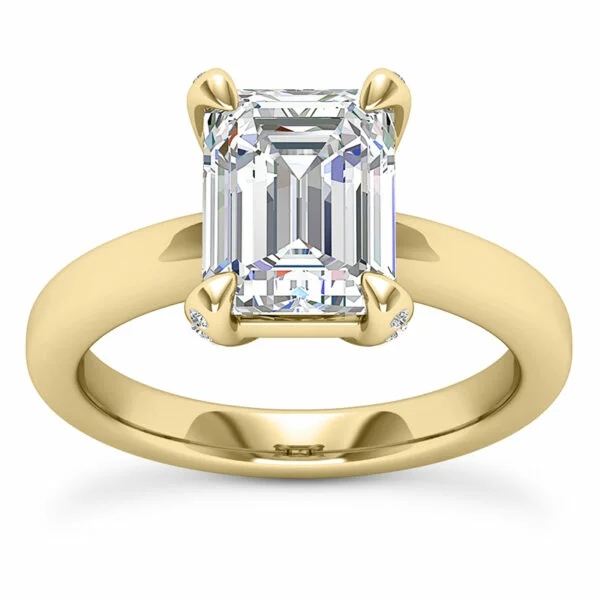
A 4-carat diamond ring is a significant purchase, but there is no standard price. As of September 2026, published retail estimates suggest a practical Canadian planning range of approximately CAD $30,000 to $185,000 or more for a natural 4-carat centre diamond, and CAD $4,000 to $60,000 or more for a lab-grown centre diamond, before the setting and taxes.
The 4-carat diamond engagement ring price depends on origin, cut, colour, clarity and carat weight, as well as shape, certification and setting design.
4 Carat Diamond Engagement Ring Price at a Glance
The figures below are planning estimates, not quotations.
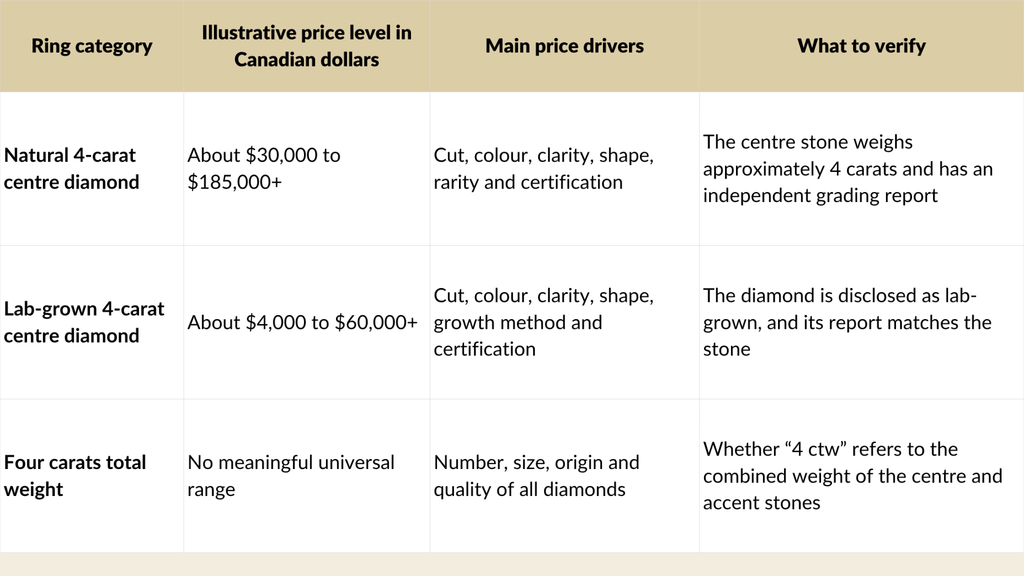
Prices are illustrative as of September 2026, are market-dependent and exclude the setting, taxes, appraisal and insurance. The individual diamond and design determine the final price.
What Does 4 Carats Mean?
Before comparing prices, confirm exactly what the carat figure describes.
Centre Stone Weight Versus Total Carat Weight
Carat measures weight, not quality or exact visible size. One carat equals 200 milligrams, so a 4-carat diamond weighs 0.8 grams.
A 4-carat centre diamond is very different from four carats total weight, which may combine a smaller centre with side stones, a halo or pavé diamonds. Because large individual natural diamonds are rarer, one 4-carat stone generally occupies a different price category from several smaller diamonds of the same combined weight.
Always ask for the centre stone’s individual weight and the total weight of the remaining diamonds separately.
How Large a 4 Carat Diamond Looks
Two diamonds of equal weight can look different from above. Shape, length-to-width ratio and cut proportions determine how much weight is visible across the finger and how much is carried in the stone’s depth.
Elongated shapes may appear larger than round diamonds of the same weight, but visual spread does not indicate quality. Compare millimetre measurements, proportions and videos of the actual stone.
Natural Versus Lab-Grown 4 Carat Diamond Prices
Natural and lab-grown diamonds share the same core chemical, physical and optical properties, but differ in origin, rarity, pricing and resale market. A natural diamond forms in the earth and generally commands a substantial rarity premium. A lab-grown diamond is created in a controlled environment and usually costs considerably less at a comparable grade.
The right choice depends on your priorities. A natural diamond may appeal if geological rarity and origin matter most. Our lab-grown diamonds may suit buyers seeking greater size or higher specifications within a defined budget. Avoid fixed percentage comparisons because inventory and markets change.
How the 4Cs Affect the Price
The 4Cs work together, and a modest change in one grade can create a significant price difference at this size.
Cut
Cut and proportions strongly influence brilliance and face-up beauty. A deep 4-carat diamond may look smaller or less lively than a slightly lighter, better-cut stone. Review the laboratory cut grade for rounds; for fancy shapes, examine the proportions and actual stone carefully.
Colour
Colour is easier to notice in larger diamonds, but the shape and setting metal affect its appearance. A near-colourless diamond may look beautiful in yellow or rose gold, while white metal may make warmth more apparent. The highest grade is not automatically the best value.
Clarity
For many buyers, the practical goal is an eye-clean diamond, with no inclusions visible without magnification at a normal distance. Inclusion type, size, colour and location matter, so diamonds with the same clarity grade may not look equally clean.
Carat
Price per carat jumps at important weight thresholds, so an exact 4.00-carat diamond may command a premium. A well-proportioned 3.80- to 3.99-carat stone can offer similar visual dimensions for less. Our guide to diamond price per carat explains these thresholds.
Other Factors That Change a 4 Carat Ring Price
The 4Cs are only part of the valuation. When comparing loose diamonds, also consider:
- Shape: Round brilliant diamonds are often priced differently from fancy shapes because of demand and the amount of rough material lost during cutting. Compare similar grades and measurements rather than shape alone.
- Certification: Request an independent report and match its number to the diamond. Our overview of diamond certification explains what these documents establish.
- Finish and Proportions: Polish, symmetry, depth, table percentage and length-to-width ratio influence both appearance and value.
- Fluorescence & Inclusions: Their effect depends on strength, type and location.
- Setting: Metal choice, side stones, pavé work, a hidden halo and custom labour all add to the completed ring price. A large centre stone also requires a secure setting and well-designed prongs for daily wear.
Include appraisal, insurance and applicable Canadian sales taxes in the total purchasing plan.
How to Balance Size, Quality and Budget
Begin with a complete engagement ring budget that covers the centre diamond, setting, taxes, appraisal and insurance. Then decide which qualities are non-negotiable.
For many buyers, a sensible order of priority is:
- Choose natural or lab-grown based on your values and budget.
- Prioritize cut, proportions and visible beauty.
- Select a colour that works with the chosen metal.
- Seek eye-clean clarity rather than paying automatically for a grade that cannot be appreciated without magnification.
- Compare stones slightly below 4.00 carats if their face-up dimensions are similar.
Do not lower grades mechanically to reach a target price. Review the diamond by video or in person for light performance, tint and inclusion placement. A grading report is essential, but it does not replace seeing the stone.
Compare 4 Carat Engagement Rings in Toronto
At Samuel Kleinberg, we help you compare natural and lab-grown options, understand grading reports and select a setting engineered for a substantial centre stone. You can explore our engagement rings in Toronto and consider whether a classic solitaire engagement ring or a custom engagement ring best suits the diamond and your personal style.
An appointment lets you compare proportions, shapes and quality combinations within your budget before purchasing.
Choose the Diamond, Not Just the Number
The 4-carat diamond engagement ring price reflects much more than weight. Origin, cut, colour, clarity, shape, certification and setting design determine cost and lasting beauty.
By comparing actual stones and concentrating on visible quality, you can decide confidently without paying for specifications that add little to the finished ring. Browse current options or book an appointment with us to evaluate the diamond and setting together.
Frequently Asked Questions
1. What is the best diamond shape for a 4 carat engagement ring?
There is no universally best shape. Round diamonds offer classic brilliance; fancy shapes create different proportions and visual effects. Choose according to appearance, lifestyle and budget.
2. Can a 4 carat diamond look larger depending on its shape?
Yes. Elongated shapes may have a larger face-up presence, while a deeply cut stone can look smaller than its weight suggests. Compare millimetre dimensions and proportions for the individual diamonds.
3. What should I look for in a 4 carat diamond grading report?
Check carat weight, colour, clarity, measurements, proportions, polish, symmetry and fluorescence. Review the inclusion plot or comments, confirm whether the diamond is natural or lab-grown and match the report number to the stone.
4. How can I tell if a 4 carat diamond is eye-clean?
Inspect high-resolution video and view the diamond at a normal distance under varied lighting. Note dark, reflective or centrally located inclusions.
5. Does a 4 carat diamond need a special engagement ring setting?
It needs a setting designed for its shape and measurements. Secure prongs and sufficient structural support are especially important.
6. Are 4 carat diamonds suitable for everyday wear?
Yes, with a secure setting and proper care. Avoid activities involving impact, inspect the prongs regularly and arrange professional maintenance.
7. Can I choose a custom setting for a 4 carat diamond?
Yes. A custom design can account for the diamond’s dimensions, profile, band width and your lifestyle.
8. Is a 3.9 carat diamond a good alternative to a 4 carat diamond?
It can be. If a 3.9-carat diamond has comparable face-up dimensions, strong cut quality and the appearance you prefer, it may avoid part of the premium associated with the 4.00-carat threshold.