
Diamond prices are often discussed using a price per diamond carat, but carat weight is only one part of the calculation. Two diamonds that weigh exactly one carat can have significantly different prices because of differences in cut, colour, clarity, shape, proportions, origin, and grading documentation.
At Samuel Kleinberg Jewellers, clients can compare diamonds based on their complete quality profile and visible appearance, not carat weight alone.
Quick fact: Some people search for “price per karat diamond,” but karat measures gold purity. Carat is the correct term for diamond weight.
What Does Price Per Diamond Carat Mean?
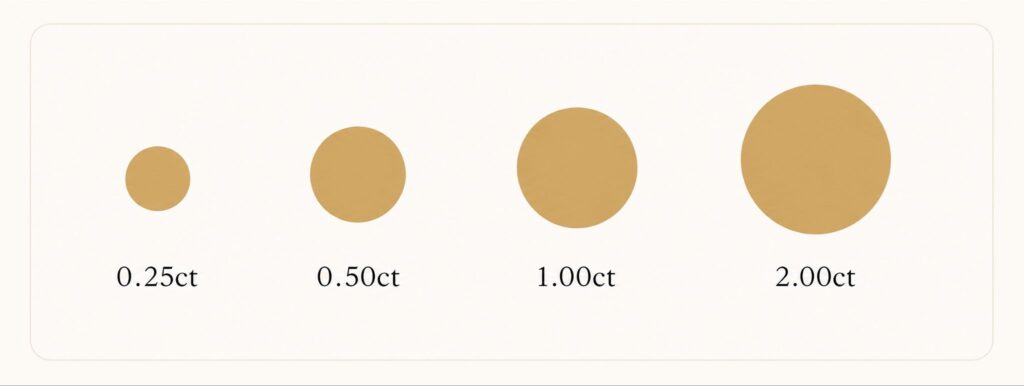
A carat is a unit used to measure diamond weight. One metric carat equals 200 milligrams, or 0.20 grams. Each carat can also be divided into 100 points, meaning a 0.50-carat diamond may be described as a 50-point diamond.
The calculation is straightforward:
Total diamond price ÷ carat weight = price per carat
For example, if a 1.25-carat diamond costs $10,000:
$10,000 ÷ 1.25 = $8,000 per carat
This calculation can help with comparisons, but it does not tell you which diamond is more beautiful or offers better overall value.
Why Does the Price Per Carat Increase With Size?
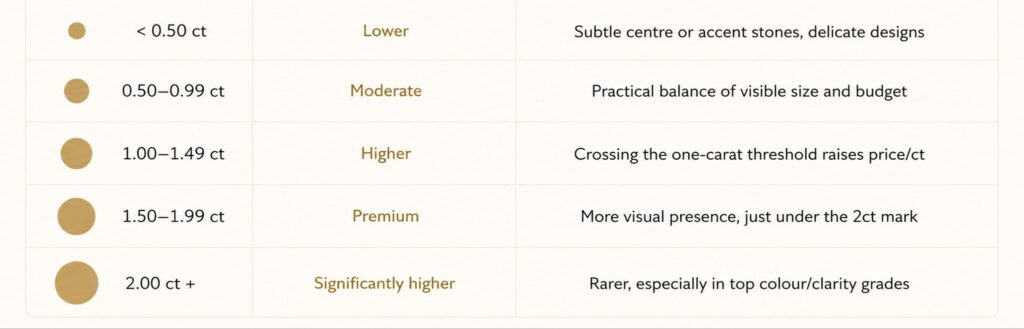
Larger diamonds are less common than smaller diamonds. As a result, the price per carat generally rises as weight increases.
The increase is not always proportional. A comparable two-carat diamond will usually cost considerably more than twice the price of a one-carat diamond because larger gem-quality stones are rarer.
Common pricing milestones, sometimes called “magic sizes,” include:
- 0.50 carat
- 1.00 carat
- 1.50 carats
- 2.00 carats
Crossing one of these milestones may increase the price per carat even when the visual difference is small.
How the 4Cs Affect the Price Per Carat
Cut, colour, clarity and carat weight all move price independently.
Carat
Carat measures weight, not physical dimensions. Higher carat weights generally command a higher price per carat when the other quality factors are comparable.
Cut
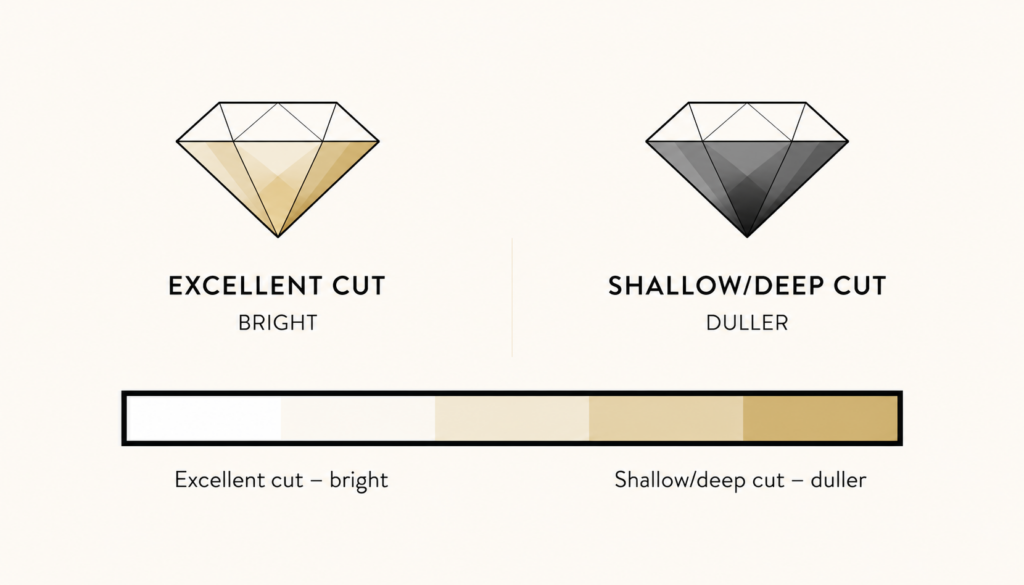
Cut affects brightness, fire, sparkle, and how effectively the diamond returns light. A smaller, well-cut diamond may appear more impressive than a heavier diamond with poor proportions.
Colour
For diamonds in the traditional D-to-Z range, grades closer to colourless are generally rarer and more expensive. However, differences between neighbouring grades may be difficult to notice once a diamond is set.
Clarity
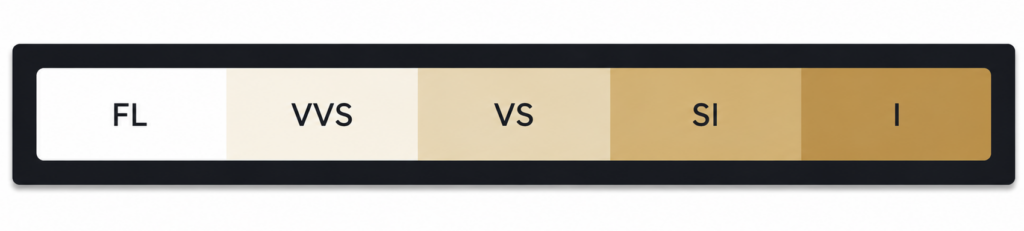
Clarity evaluates inclusions and surface blemishes. Higher clarity grades generally cost more, although many characteristics in VVS and VS diamonds cannot be seen without magnification.
How Diamond Shape Affects Carat Price
Round brilliant diamonds often carry a higher price than many fancy-shaped diamonds. They are highly popular, and more rough material is generally lost while producing the round outline.
Fancy shapes include:
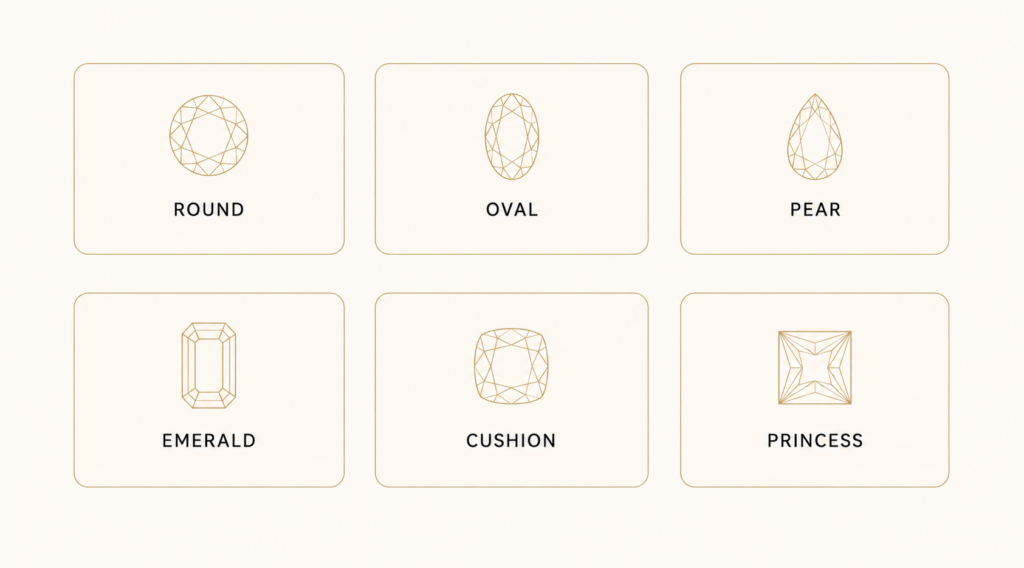
- Round: Requires the most rough diamond to be removed during cutting and remains the most in-demand shape, often commanding the strongest price per carat.
- Oval: Elongated outline can look larger face-up than a round of the same weight, often at a lower price per carat.
- Pear: A hybrid round-and-marquise silhouette; retains a good yield of the rough stone with an elongated look.
- Emerald: Step-cut facets show off clarity clearly; inclusions are easier to spot, so clean stones matter more here.
- Cushion: Rounded-corner square retains more rough than round cuts, often landing at a more moderate price per carat.
- Princess: Square brilliant cut retains more of the rough stone than a round cut, a common value-oriented choice.
Elongated shapes such as oval, pear, and marquise diamonds may offer a larger-looking face-up area at the same carat weight. However, appearance depends on the individual diamond’s proportions, not shape alone.
Natural vs. Lab-Grown Diamond Prices
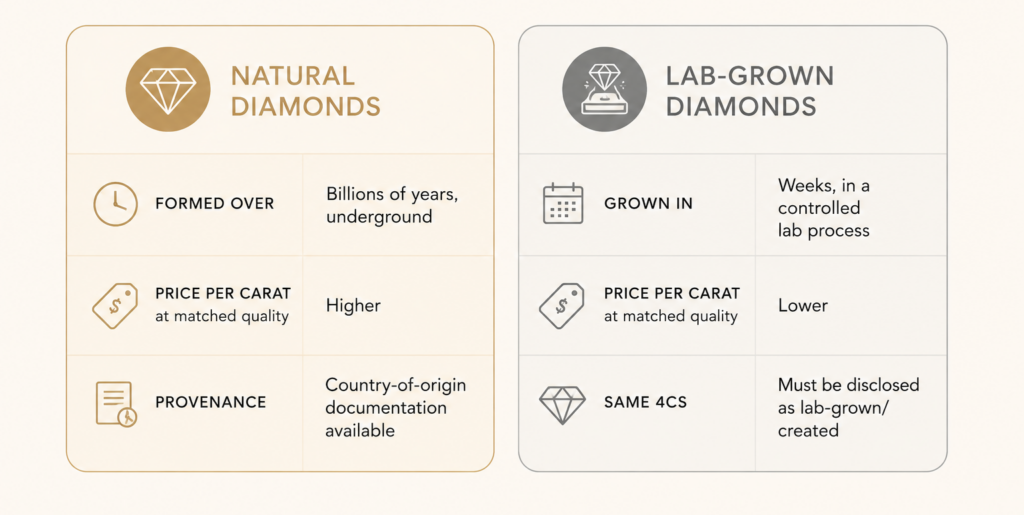
Same physical, chemical, and optical properties, different rarity, different price. Compare what natural and lab-grown diamonds generally offer at a matched size and quality. Our synthetic diamond vs. real diamond price guide examines that cost difference in more detail and clarifies why both natural and laboratory-grown stones are real diamonds.
Where Does Your Carat Weight Sit?
How to Compare Two Diamonds of the Same Carat Weight
Consider two hypothetical one-carat diamonds:
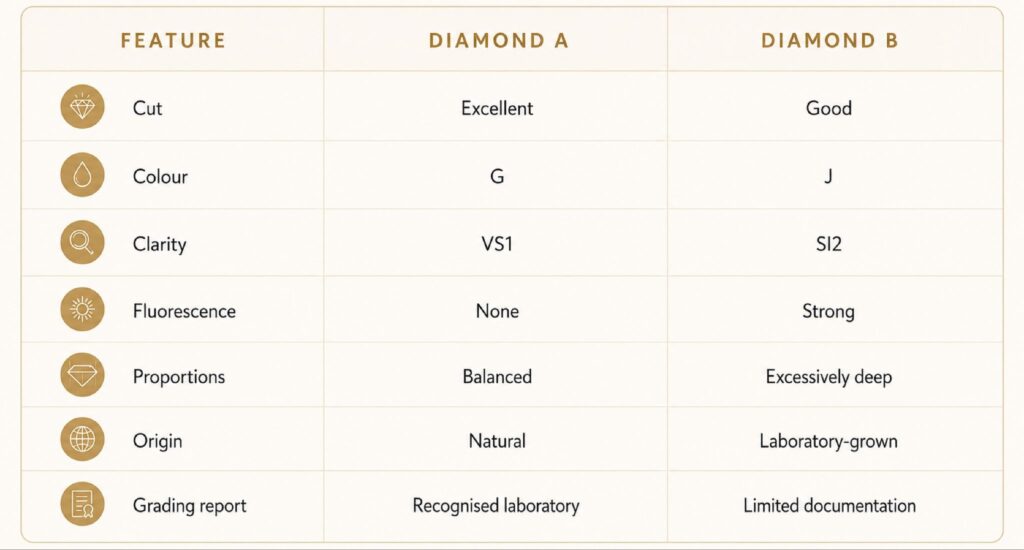
Although both diamonds weigh one carat, they are not directly comparable. Their appearance, origin, rarity, documentation, and market pricing may be very different.
Fluorescence can also influence market pricing, although GIA research indicates that it has little or no visible effect on the appearance of most diamonds.
Choosing the Right Diamond With Samuel Kleinberg Jewellers
Online charts can provide a general reference, but they cannot show how a diamond performs in person.
Samuel Kleinberg Jewellers can help clients compare:
- Carat weight
- Face-up dimensions
- Cut and proportions
- Colour and clarity
- Diamond shape
- Natural or laboratory-grown origin
- Grading documentation
- Total price and price per carat
The team works with clients choosing diamonds for engagement rings, custom-designed rings, wedding jewellery, and other fine jewellery pieces. Couples can also explore engagement rings in Toronto at Samuel Kleinberg to see how different diamond sizes, shapes and qualities look in a finished setting.

Frequently Asked Questions (FAQs)
- What does price per carat mean?
It is the diamond’s total price divided by its exact carat weight.
- Is carat the same as karat?
No. Carat measures diamond weight, while karat measures gold purity.
- Why do two one-carat diamonds have different prices?
Their cut, colour, clarity, shape, proportions, origin, and grading reports may be different.
- Does a larger diamond always cost more per carat?
Generally, yes. Larger gem-quality diamonds are rarer, so their price per carat often increases.
- Are lab-grown diamonds less expensive?
Lab-grown diamonds generally have a lower price per carat than comparable natural diamonds.
- Can a smaller diamond look larger?
Yes. Shape, depth, proportions, and face-up measurements can make two equal-weight diamonds appear different in size.
- Are diamonds below one carat better value?
Diamonds just below popular milestones, such as 0.90 or 0.95 carat, may offer a similar appearance at a lower total price.