
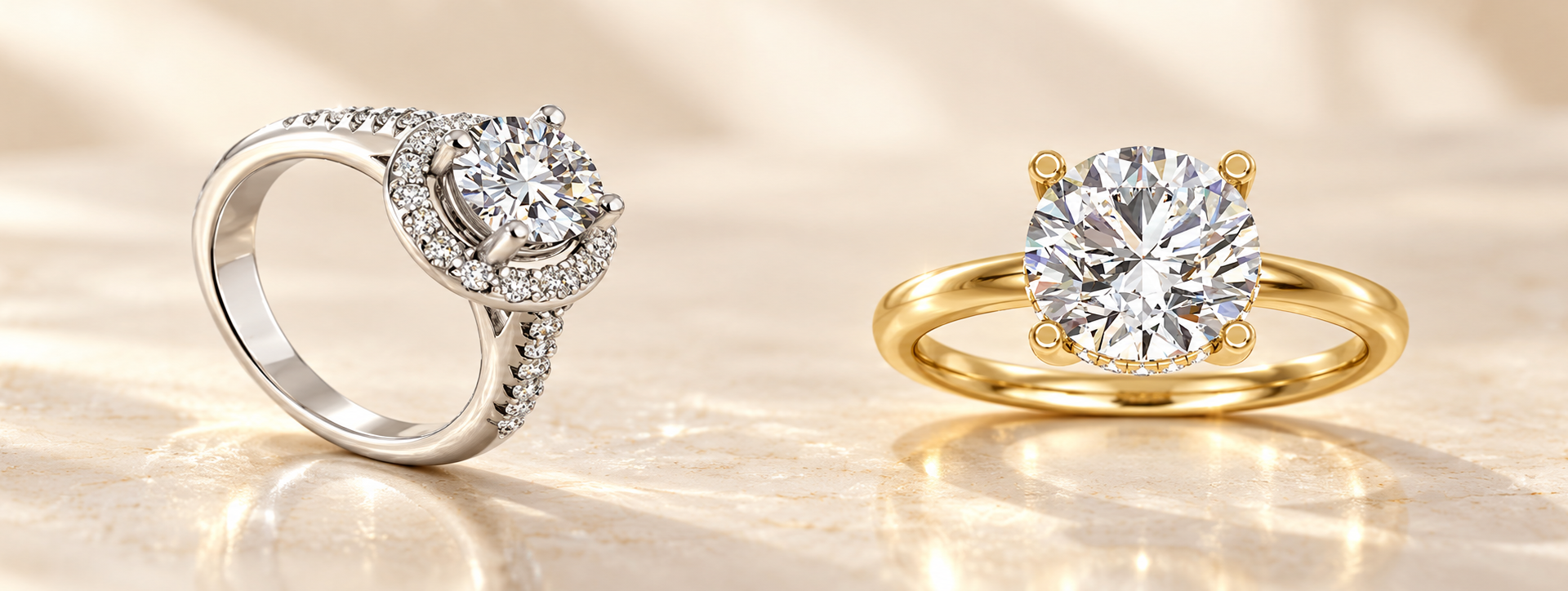
White gold is not automatically more expensive than yellow gold. When karat, weight and craftsmanship are comparable, their base prices are often similar. White gold may cost slightly more when rhodium plating or extra finishing is included, and that finish can add maintenance costs.
A meaningful comparison of white gold and yellow gold prices should consider the entire ring, not just the colour of the metal.
White Gold Price vs. Yellow Gold Price at a Glance
An accurate comparison starts with rings of the same karat, similar weight and comparable construction.
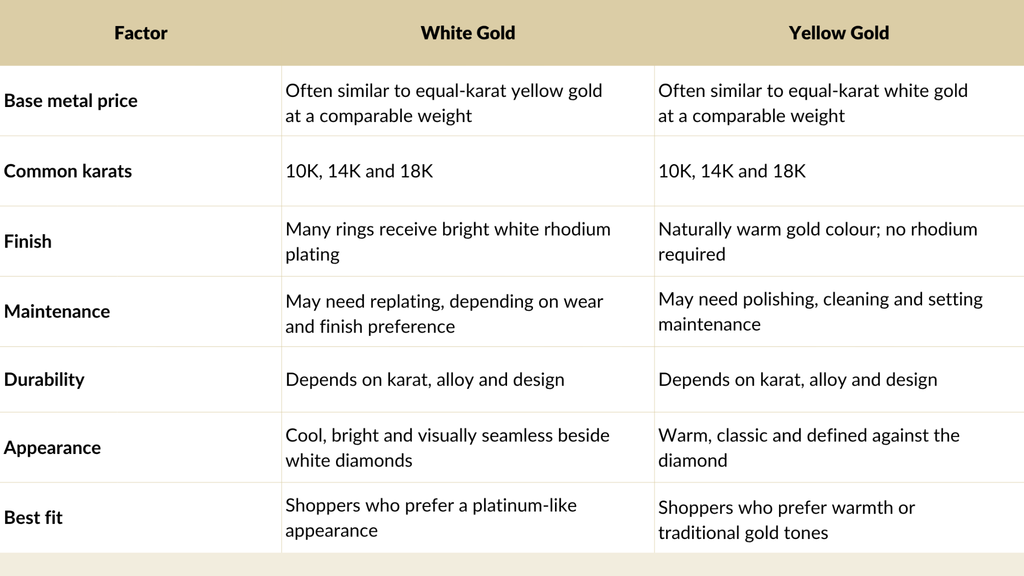
Retail prices also reflect labour, setting complexity, finishing, the diamond and customization. A simple 14K white-gold solitaire may cost less than an intricate 14K yellow-gold pavé ring, even if white gold carries an added finishing cost.
Why White and Yellow Gold Prices Can Differ
Several variables can create a price difference between two rings that appear similar at first glance.
Gold Purity and Karat
Pure 24K gold is too soft for most engagement-ring settings, so it is alloyed with other metals. Karat indicates gold content: 10K is approximately 41.7% gold, 14K is approximately 58.3%, and 18K is 75%.
Higher karat generally raises material cost when weight and design remain equal. To isolate the effect of colour, compare 14K white gold with 14K yellow gold, not different karats.
Alloy Metals and Manufacturing
Yellow and white gold use different alloy mixtures. Yellow-gold alloys retain a warm tone, while white-gold alloys use whitening metals for a paler appearance. Composition varies, so colour, hardness and cost can differ within the same karat.
If you have a metal sensitivity, ask about the specific alloy. Some white-gold formulations may contain nickel, while others use different metals.
Rhodium Plating on White Gold
Many white gold engagement rings receive rhodium plating for a crisp, reflective surface. This may slightly increase the initial price. As plating wears, the warmer white-gold alloy can become visible.
Replating can restore the bright finish, but there is no universal schedule; timing depends on wear, alloy, finish and care.
Ring Weight and Setting Complexity
A wider band uses more metal, while pavé, halos and custom details add stones and labour. These factors can outweigh a modest difference between metal colours. When planning an engagement ring budget, compare complete specifications.
Which Costs More for an Engagement Ring?
When comparing yellow gold and white gold engagement ring prices, neither metal is consistently more expensive.
Two rings with the same centre diamond, 14K gold, weight and setting may be priced very closely. White gold could be marginally higher when plating and extra finishing are included. Give the yellow-gold ring a heavier band or pavé, however, and it may cost more.
The centre stone often creates a much larger difference. Its carat weight, cut, colour, clarity and origin all influence the total. Reviewing diamond price per carat puts the metal decision in context.
Long-Term Cost and Maintenance
White gold may need rhodium replating as well as routine care. Yellow gold needs no rhodium, but can still require polishing, cleaning and setting work.
Wear and care habits affect both metals. Our guide to cleaning gold jewellery explains safe care between professional inspections.
Appearance and Diamond Colour
White gold creates a cool, continuous look around a colourless diamond. Yellow gold adds warmth and contrast, often suiting classic or vintage-inspired designs. Explore gold band engagement ring styles to see how colour changes the overall impression.
A two-tone design can combine a warm yellow band with bright white prongs around the diamond.
How to Choose Between White and Yellow Gold
An engagement ring should suit the wearer’s style and routine. Consider:
- Existing jewellery and whether cool or warm metals are worn most often
- The desired contrast between the diamond, prongs and band
- Comfort with potential rhodium replating
- How frequently the ring will be worn and the activities it will encounter
- Any known metal allergies or sensitivities
- Quotes based on the same diamond, karat, weight and setting specifications
Both metals suit bespoke designs. A custom engagement ring maker can refine proportions, finishes and two-tone details around your budget.
Compare Engagement Rings in Toronto
The best way to compare yellow gold engagement rings and white-gold designs is side by side. At our Toronto showroom, we can compare both metals, natural and lab-grown diamonds, settings and custom options within your budget.
Browse our engagement rings in Toronto and book an appointment to compare them in person. The right choice balances price with lasting appearance, care and personal style.
Frequently Asked Questions
1. Can white gold and yellow gold be used with the same diamond?
Yes. The choice changes the visual relationship between the stone and setting, not the diamond itself.
2. Does gold colour affect the resale value of an engagement ring?
Purity, weight, diamond quality, condition, craftsmanship and demand generally matter more than colour. An appraisal and a resale offer also serve different purposes.
3. Can white gold turn yellow over time?
It does not turn into yellow gold. Worn rhodium plating can reveal the alloy’s warmer tone; replating restores a brighter white surface.
4. Can I change my engagement ring from yellow gold to white gold later?
White plating may wear and expose yellow metal. Resetting the diamond or remaking the setting may be better, depending on the design. Have the ring assessed first.
5. Are both metals suitable for custom engagement rings?
Yes. Both suit solitaire, halo, pavé, three-stone and fully custom designs. The best alloy and karat depend on the design.
6. Can I mix white and yellow gold in one engagement ring?
Yes. A ring can pair a yellow band with white prongs or use both colours throughout the design.
7. Which gold colour suits my diamond shape?
No shape requires a particular colour. Consider the design, desired contrast and jewellery the wearer already prefers.
8. Does gold colour matter with a lab-grown diamond?
Yes, aesthetically. White gold creates a cooler frame, while yellow gold adds warmth and contrast; the choice remains personal.