
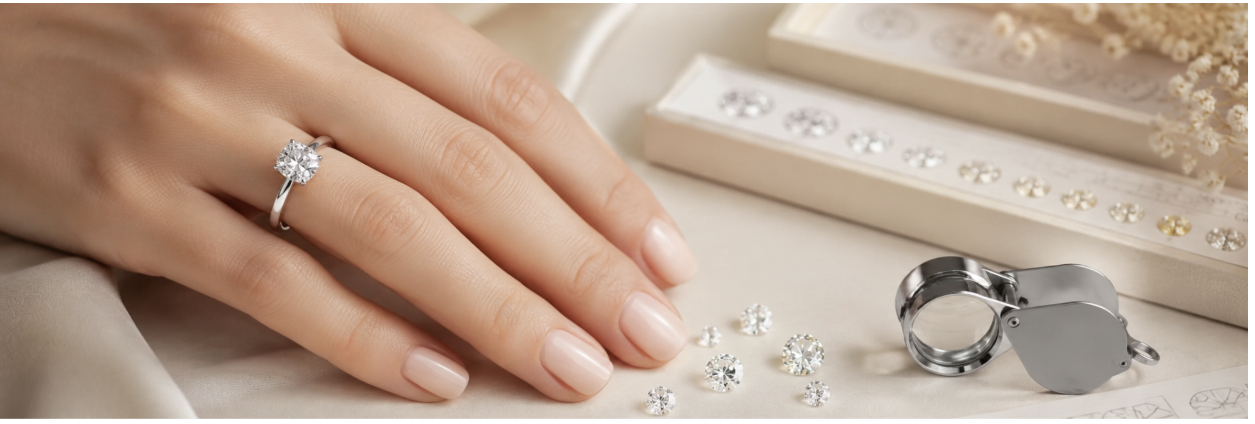
A diamond grading report can feel overwhelming at first. Letters and numbers such as D, G, VS1, SI2, and Excellent may not immediately explain what the diamond will look like.
A grading of diamonds chart makes these details easier to understand. It helps buyers compare diamonds using recognized quality factors rather than focusing only on size or price.
The main diamond grading system is based on the 4Cs:
- Cut: How well the diamond reflects light
- Colour: How colourless the diamond appears
- Clarity: The presence of internal or surface characteristics
- Carat weight: The diamond’s weight
The beauty and individuality of a diamond are not entirely captured by these grades, although they do offer helpful information.
Samuel Kleinberg Jewellers can help clients:
- Compare diamond grading reports
- Understand differences between grades
- Review certified diamonds
- Choose a diamond that fits their style and budget
Quick takeaway: A grading report describes measurable characteristics, but the most beautiful diamond is ultimately the one that appeals to you in person.
What Is a Diamond Grading System?
A gem grading system is a standardized way to describe and compare the quality of diamonds and other gemstones.
Before modern grading systems, jewellers often used terms such as “blue white” or “loupe clean.” These descriptions were not always consistent, so the same term could mean different things to different sellers.
Today, grading laboratories assess loose diamonds under controlled conditions. The process may include:
- Examining the diamond under standardized lighting
- Measuring its dimensions with optical instruments
- Weighing it with precise equipment
- Comparing its colour with reference stones
- Evaluating clarity under 10× magnification
- Having multiple graders review the results
The final grade helps buyers compare:
- Overall quality
- Relative rarity
- Visible characteristics
- Potential value
- Diamonds from different sellers
Important: A grade is not the same as a price. Two diamonds with similar grades may still differ in cut proportions, fluorescence, inclusion placement, appearance, and market value.
The 4Cs of Diamond Grading
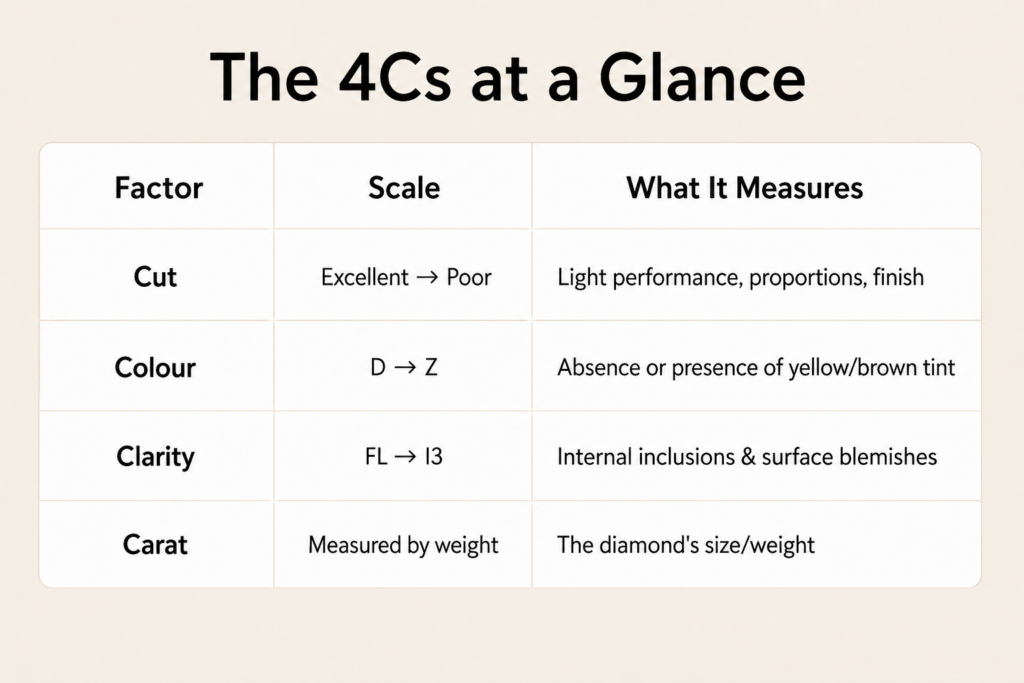
Note: Gemological Institute of America’s (GIA’s) Excellent–Poor cut scale applies to standard round brilliant natural diamonds (D–Z colour range). Other shapes get measurements and finish details, but not always an overall cut grade.
A 60-Second Diamond Check
When reviewing a grading chart, ask:
- Does the diamond look bright in normal lighting?
- Can I see any colour when it is viewed face-up?
- Can I see an inclusion without magnification?
- Am I paying for a grade difference I can actually notice?
Your answers may be more useful than automatically selecting the highest grade available.
Understanding the Diamond Colour Scale
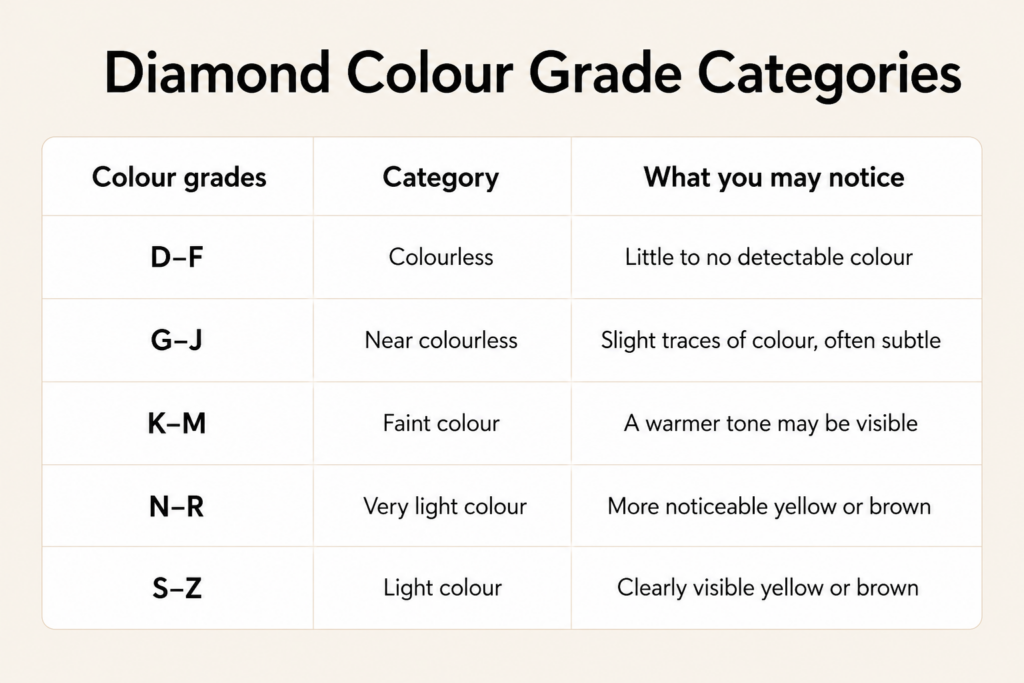
The D-to-Z colour scale grades natural diamonds from colourless to light yellow or brown.
Diamonds are compared with master stones under controlled lighting. Because colour differences between neighbouring grades can be very subtle, grades such as G and H may look nearly identical once set in jewellery.
Does the Setting Affect Diamond Colour?
Yes. Metal colour can change how a diamond’s tone appears:
- White gold or platinum may highlight warmth.
- Yellow or rose gold can make warmth less noticeable.
- White-metal prongs can help separate the centre stone from a yellow-gold band.
- Bright halo diamonds may make the centre diamond’s colour more visible.
Compare the diamond in different metals before choosing a colour grade.
Understanding the Diamond Clarity Scale
Clarity refers to internal features called inclusions and surface features called blemishes. Examples include crystals, feathers, clouds, pinpoints and scratches. Graders consider each characteristic’s size, number, nature, position and visibility under 10× magnification. GIA uses 11 grades, ranging from Flawless to Included; most diamonds fall in the VS or SI range.
The grade describes what a trained grader sees under standard conditions. It does not guarantee what will be visible to the naked eye.
“Eye-clean” refers to a diamond that has no inclusions that are apparent to the unaided eye at a typical viewing distance; it is not an official grade. A well-chosen VS2 or SI1 can easily be eye-clean, even with visible inclusions under a loupe.
Diamond Clarity & Colour: Practical Shopping Guide
Use this quick cheat-sheet to target the right quality tiers for your target budget:
Note: Appearance still depends heavily on cut, shape, size, fluorescence, and setting; use this table as a starting point, not a final answer.
How Cut Influences Colour and Clarity
Cut is the engine behind a diamond’s brilliance.
- Exceptional Light Return: A well-cut diamond reflects light so intensely that it masks subtle body warmth and hides minor inclusions.
- Poor Proportions: Leaks light through the bottom, making the center look dark or glassy, which emphasizes inclusions and tint.
Diamond Shape Considerations
- Brilliant Cuts (Round, Oval, Cushion): Multiple scattered facets easily hide minor clarity flaws.
- Step Cuts (Emerald, Asscher): Broad, open “mirror-like” facets highlight inclusions; prioritize clarity (VS2 or higher) here.
Does a Higher Grade Always Mean a Better Diamond?
Not necessarily. Higher grades signify technical rarity, not guaranteed visual superiority.
Consider this real-world trade-off:
- Diamond A: Graded VVS1 Clarity / D Colour (Higher price tag, microscopic inclusions).
- Diamond B: Graded VS2 Clarity / G Colour with an Excellent Cut (Lower price tag, identical look to the naked eye).
Diamond B allows you to put more of your budget into a larger carat size or a superior cut, yielding more sparkle for the exact same investment.
How are Lab-Grown Diamonds Graded?
Laboratory-grown diamonds can also be evaluated for quality, but report terminology may differ from natural diamonds. Since October 2025, GIA has classified eligible colourless to near-colourless lab-grown diamonds as Premium or Standard, based on factors including colour, clarity, cut, polish and symmetry.
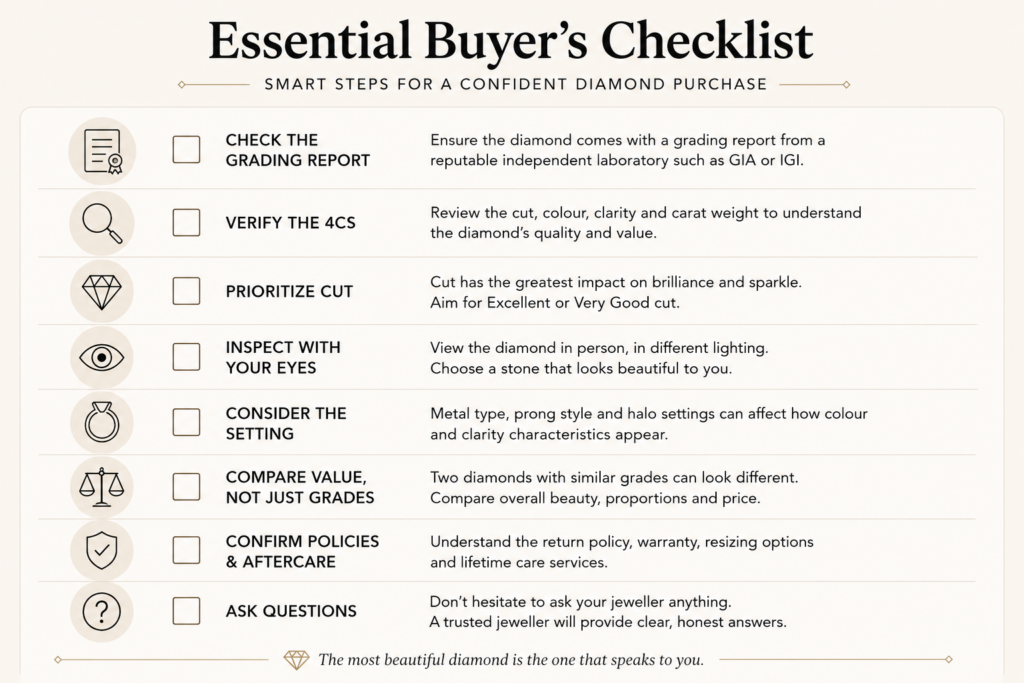
When comparing diamonds, check whether the report identifies the stone as natural or laboratory-grown and confirm which grading system the laboratory uses.
This is enough. You do not need a long separate section unless Samuel Kleinberg specifically sells or wants to promote lab-grown diamonds.
Why Professional Guidance Matters
Grading charts are essential for shortlisting options, but paper specs cannot capture a diamond’s movement, sparkle, or unique personality.
A trusted jeweller helps you spot non-graded variables like inclusion placement, fluorescence impact, and real-world light performance.
Find Your Perfect Diamond with Samuel Kleinberg Jewellers
Understand the grades, compare certified diamonds, and choose a stone that balances beauty, quality, and budget with guidance from Samuel Kleinberg Jewellers. Book a Diamond Consultation with us.
Frequently Asked Questions (FAQs)
- What are the 4Cs of diamond grading?
The 4Cs are cut, colour, clarity, and carat weight. Together, they help describe a diamond’s quality and overall characteristics.
- What is the best diamond colour grade?
D is the highest colour grade, but G–H diamonds can also appear very white and may offer better value.
- What clarity grade looks clean to the eye?
Many VS1, VS2 and carefully selected SI1 diamonds can appear clean without magnification. Visibility depends on the diamond’s size, shape and inclusion placement.
- Is cut more important than colour and clarity?
Cut has the greatest influence on sparkle and brightness. A well-cut diamond can often look more impressive than a higher-colour or higher-clarity stone with weaker proportions.
- Does a better diamond automatically have a higher grade?
Not necessarily. Two diamonds with different grades may look very similar in person, so beauty, size, setting and budget should also be considered.
- Are lab-grown diamonds graded differently?
They can be. Grading terminology may vary by laboratory, so buyers should check the report and confirm whether the diamond is natural or laboratory-grown.
- Can the ring setting affect diamond colour?
Yes. Yellow or rose gold can make warmth less noticeable, while white metals may create more contrast.
- Why should I compare diamonds in person?
A grading report cannot fully show sparkle, colour appearance, or visible inclusions. Viewing the diamond helps you judge its overall beauty and value.