
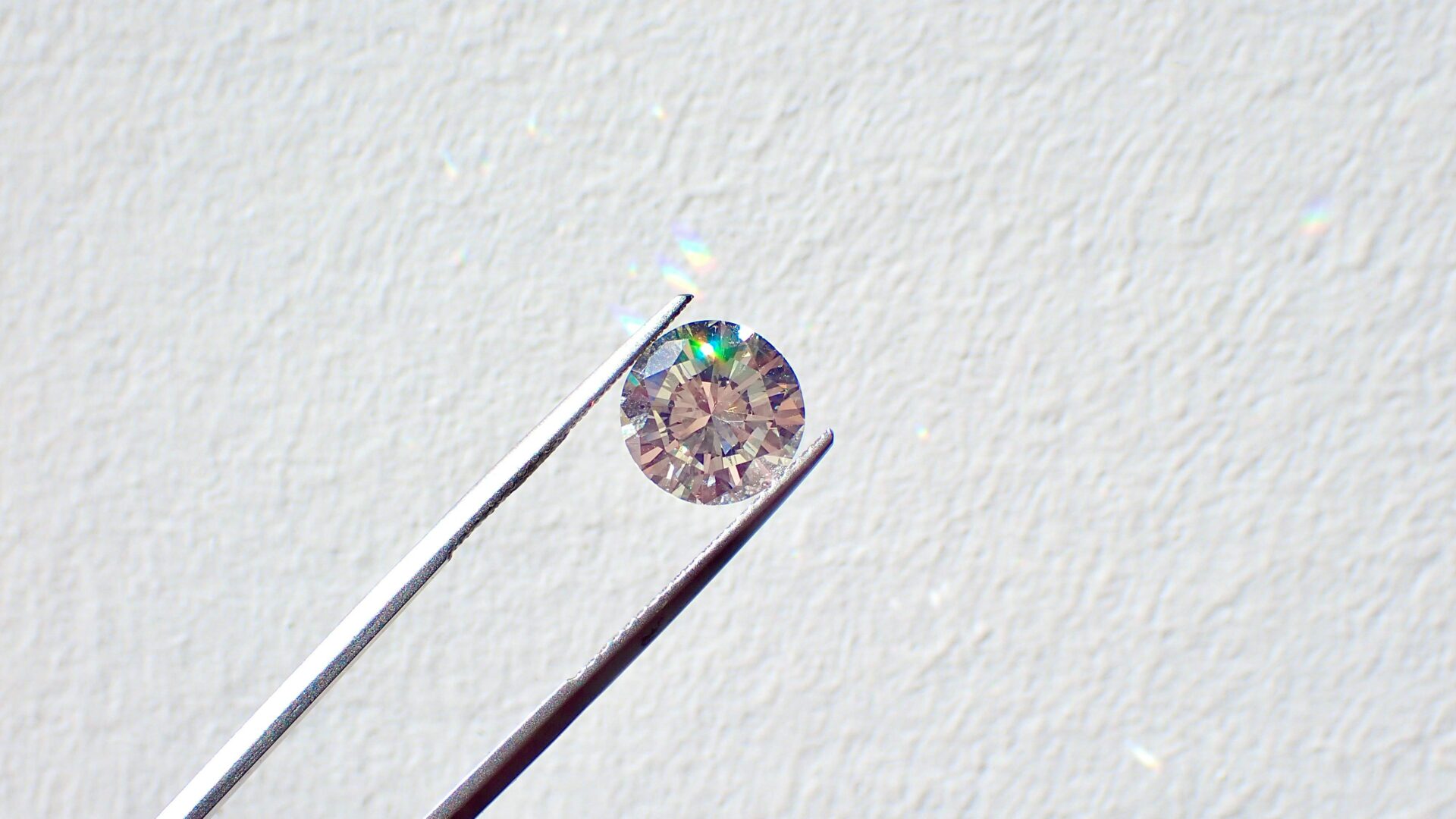
When you hold a diamond up to the light, you aren’t just looking at a gemstone; you are looking at a geological time capsule. Formed billions of years ago deep within the Earth’s mantle, diamonds carry the story of their journey in the form of inclusions.
For many Canadian buyers, whether you’re searching for an engagement ring in Toronto or a custom anniversary piece, the term “inclusion” can sound like a negative. However, understanding these internal characteristics is the secret to finding a diamond that offers the perfect balance of beauty, rarity, and value.
What are Inclusions in a Diamond?
Think of inclusions as nature’s fingerprints. They are internal characteristics or tiny “imperfections” trapped inside the diamond at the moment of its creation.
While blemishes refer to surface-level scratches or nicks, inclusions are strictly internal. They range from microscopic crystals of other minerals to tiny structural fractures. Because no two diamonds have the exact same pattern of inclusions, these features actually serve as a “birthmark,” helping gemologists identify individual stones.
Why Do Diamonds Have Inclusions?
Diamonds are born under chaotic conditions, extreme heat and crushing pressure roughly 150 kilometres below the Earth’s surface. During this violent growth process, tiny bits of non-diamond material can get trapped inside the crystal.
- Mineral Trapping: Sometimes, tiny bits of garnet or even other diamonds are swallowed by the growing host crystal.
- Growth Spurts: Rapid geological changes or pressure shifts can cause “hiccups” in the crystal lattice, leading to internal marks.
- The “Birth History”: These features aren’t “defects” in the traditional sense; they are evidence of the stone’s natural origin.
Common Types of Diamond Inclusions
To the naked eye, most inclusions are invisible. However, under 10x magnification, a world of internal architecture is revealed. Here are the most common types found in Canadian jewellery stores:
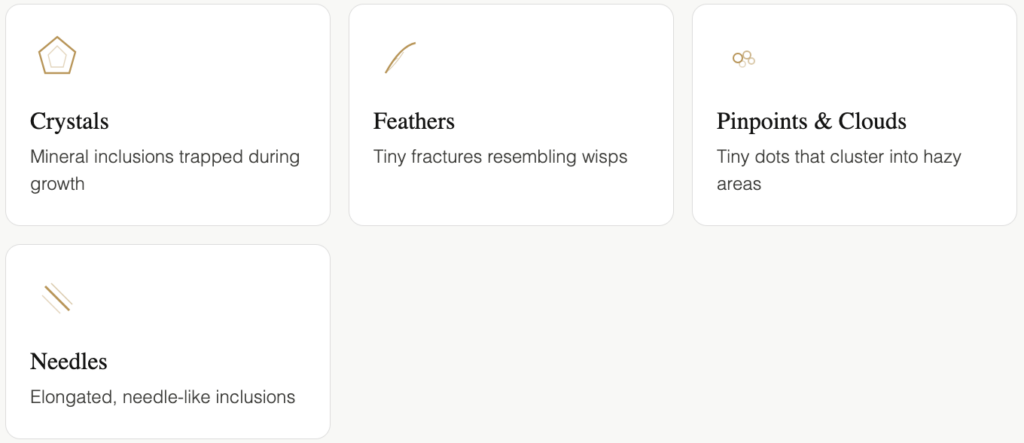
Crystals & Mineral Inclusions
Small crystals of other minerals, garnet, pyrite, or even other diamond crystals, can become trapped during the host diamond’s growth. These appear as dark or light spots under magnification. Some crystals are colourless and nearly invisible; others create beautiful, jewel-like internal features. They rarely impact durability unless very large.
Feathers
Feathers are small fractures or cleavages inside the diamond that, under magnification, resemble the delicate fronds of a feather. A small feather confined deep within the stone poses little structural concern. However, a larger feather extending toward the surface, especially near a sharp facet edge, could potentially affect the stone’s durability over time. Gemologists assess size and location carefully.
Pinpoints and Clouds
Pinpoints are extremely tiny white or black crystals, so small they appear as mere dots even at 10× magnification. When many pinpoints cluster together, they form what gemologists call a “cloud,” a hazy, nebula-like area within the stone. Light clouds rarely impact appearance; dense ones can reduce brilliance by scattering light rather than reflecting it cleanly.
Needles
Needles are long, thin, rod-shaped inclusions, often transparent or white, that extend through the diamond’s crystal structure. They’re typically only visible under magnification and are usually parallel to the stone’s crystal axis. When present in small numbers, needles are considered minor inclusions. In clusters, they can create a distinctive silvery or silky appearance under the loupe.
How Inclusions Affect Clarity & Value
Inclusions are the primary factor in a diamond’s clarity grade, one of the 4 Cs used by gemologists worldwide. The fewer and smaller the inclusions, the higher the clarity grade and, generally, the higher the value. But clarity is just one quarter of the story.

- Higher Clarity (FL to VVS): These diamonds have microscopic inclusions that are difficult for even professional graders to find.
- Lower Clarity (SI to I): These stones have inclusions that are easier to spot under magnification and, in some cases, the naked eye.
The team at Samuel Kleinberg often emphasizes that clarity grading is about more than just a label; it’s about how those inclusions interact with light. Two diamonds can have the same “SI1” grade, but one might have a hidden inclusion while the other has a visible black spot in the center.
Select a clarity grade above
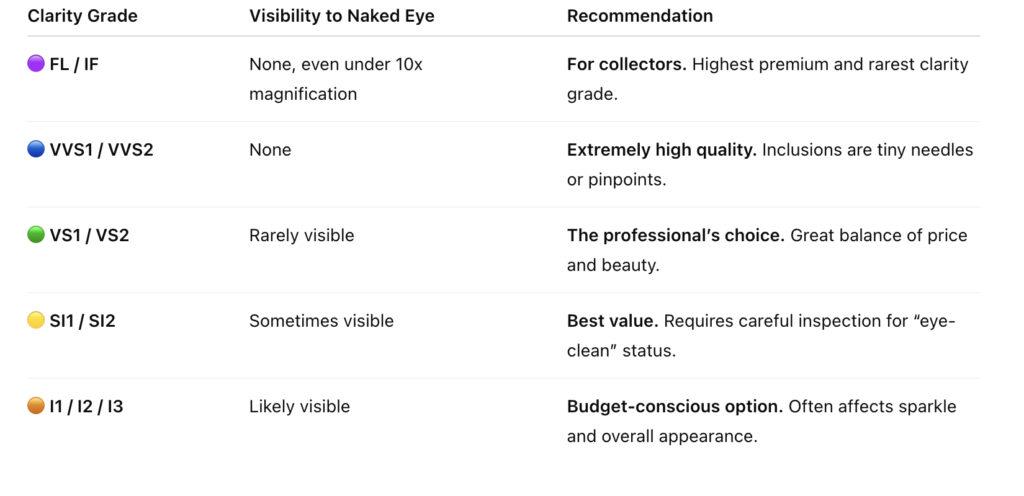
Each grade describes the size, number, and visibility of inclusions within the diamond as assessed under 10× magnification by a certified gemologist.
Understanding clarity grades is essential when evaluating a diamond; it helps you identify where on the scale your budget sits, and how much (if any) visible difference you’ll actually notice in real life.
How Inclusions Differ Between Natural & Lab-Grown Diamonds
Inclusions can be a powerful identification tool. As Samuel Kleinberg explains in the context of diamond identification, the type and pattern of inclusions often reveal whether a diamond formed underground over millions of years or was grown in a controlled environment over weeks.
Natural Earth-grown
- Mineral crystals (garnet, pyrite)
- Feathers from geological stress
- Irregular cloud patterns
- Growth graining from slow formation
Lab-grown Lab-created
- Metallic flux inclusions (HPHT)
- Columnar growth patterns (CVD)
- Strain lines from rapid growth
- Few to no mineral inclusions
How To Choose a Diamond With Inclusions in Mind
Choosing a diamond isn’t about finding a stone that is “perfect” under a microscope; it’s about finding a stone that looks perfect on a finger.
Here is a professional roadmap to navigating inclusions like a seasoned gemologist.
1. Focus on “Eye-Clean” Diamonds
In the jewellery industry, “Eye-Clean” is the gold standard for value. It means that when you look at the diamond from a normal distance (about 10 inches) under natural light, you cannot see any inclusions.
- The Sweet Spot: Look for stones in the VS2 (Very Slightly Included) or SI1 (Slightly Included) range. These often look identical to Flawless diamonds to the naked eye but cost significantly less.
How to Test if a Diamond is “Eye-Clean”
If you are evaluating a diamond, follow the industry standard used by professionals:
- Clean the stone: Use a microfiber cloth to ensure there is no surface dust or oil.
- The 10-Inch Rule: Hold the diamond (or ring) about 10 inches (25 cm) from your eyes.
- Vary the Lighting: Look at it under overhead office lights, but also move it into natural sunlight.
- The Face-Up View: Look straight down through the top. If you can’t see any spots or haziness, the diamond is considered eye-clean, regardless of what the grading report says.
Expert Note: At Samuel Kleinberg, we believe a diamond’s beauty is defined by its sparkle, not just its certificate. A diamond with a lower clarity grade that is “eye-clean” is often the smartest purchase you can make.
2. Location is Everything
Where an inclusion is located is often more important than the inclusion itself.
- Avoid the “Table”: The table is the large flat facet on top. Inclusions here are highly visible.
- Seek the “Girdle”: Inclusions near the outer edges (the girdle) are much easier to hide. A skilled jeweller, like those at Samuel Kleinberg, can often position a setting’s prongs directly over a perimeter inclusion, making it effectively invisible once the ring is finished.
3. Consider the Diamond Shape
The “Cut” of your diamond dictates how well it can hide internal marks.
- Brilliant Cuts (Round, Oval, Radiant, Pear): These have many small, triangular facets that create a “crushed ice” look. This intricate sparkle acts as camouflage for small pinpoints and feathers.
- Step Cuts (Emerald, Asscher): These have long, open parallel facets. They act like clear windows. There is nowhere for an inclusion to conceal itself in an Emerald cut. You may need to move up to a VS1 or VVS2 clarity grade for these shapes.
4. Check for “Structural Integrity”
Not all inclusions are just visual. If you are looking at a diamond with a lower clarity grade (like SI2 or I1), look at the grading plot (the “map” of the diamond):
- Warning Sign: Large feathers (cracks) that reach the surface or the “points” of a marquise or pear shape can make the stone vulnerable to chipping if hit against a hard surface.
- Safe Bet: Small crystals, clouds, and needles tucked inside the stone generally have zero impact on how long the diamond will last.
5. Be Wary of “Twinning Wisps” and “Clouds”
While some inclusions are distinct dots, others affect the entire stone’s personality.
- The “Milkiness” Trap: If a diamond has a “Cloud” as its primary inclusion, ask if it affects the transparency. You want to avoid stones that look milky or oily, even if they have no distinct black spots. A diamond should always be “crisp.”
Comparison Table: Clarity Grades at a Glance
Whether you’re shopping for an engagement ring, a milestone gift, or a fine jewellery piece, knowledge is the best tool you can bring to the process. Experts like Samuel Kleinberg have built their practice around helping Canadian buyers navigate exactly these decisions.

FAQs About Diamond Inclusions
What are diamond inclusions?
Diamond inclusions are tiny natural marks or internal characteristics found inside a diamond. They form during the diamond’s creation deep within the earth and are part of what makes each diamond unique.
Do inclusions make a diamond less valuable?
Yes, inclusions can affect a diamond’s value, especially if they are large, dark, or easy to see without magnification. However, many inclusions are very small and do not affect the diamond’s beauty in everyday wear.
Are inclusions in diamonds visible to the naked eye?
Sometimes. Many inclusions are only visible under 10x magnification, while others may be noticeable without a jeweller’s loupe. Diamonds with inclusions that are not visible to the naked eye are often called “eye-clean.”
Are diamonds with inclusions bad?
Not necessarily. Inclusions are common in natural diamonds. A diamond can still look beautiful and sparkle well even if it has inclusions, especially when they are small or hidden near the edges.
Do inclusions affect diamond durability?
Some inclusions can affect durability if they are large, deep, or located near the surface or edges of the diamond. However, most small inclusions do not cause structural problems.
What clarity grade is best for avoiding visible inclusions?
For many buyers, VS1, VS2, or SI1 diamonds can offer a good balance of beauty and value, depending on the specific stone. The goal is usually to choose a diamond that looks clean to the eye rather than focusing only on the highest clarity grade.