
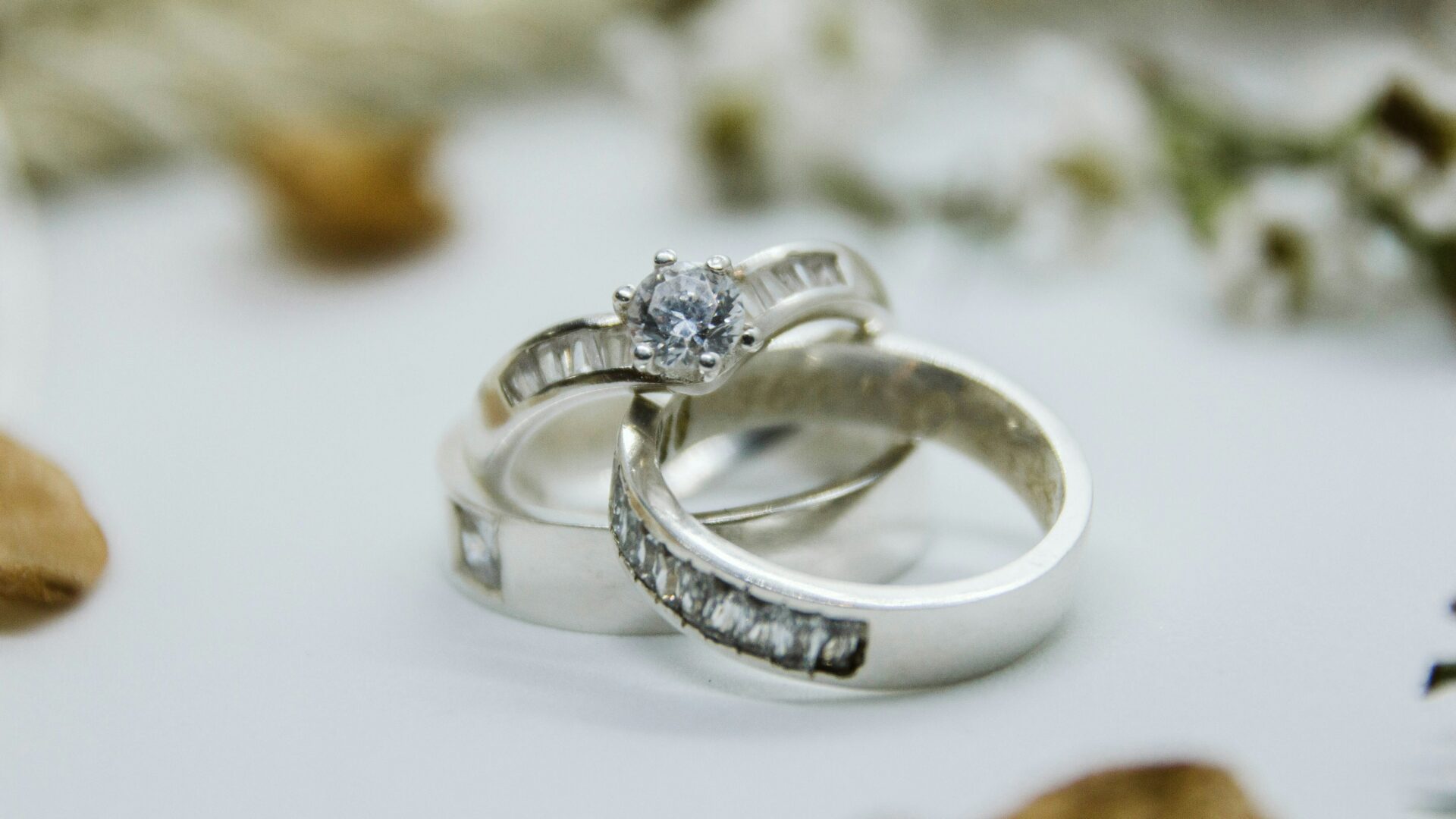
Which ring goes on first? Traditionally, the wedding band sits closest to the heart, with the engagement ring above it on the left ring finger. This arrangement is meaningful, but it is not a rule. The right way to wear both rings is the one that feels comfortable, protects each piece and reflects your style, culture and routine.
If you are deciding how to wear engagement rings and wedding bands, this guide covers order, placement, ceremony etiquette, stacking, fit and care.
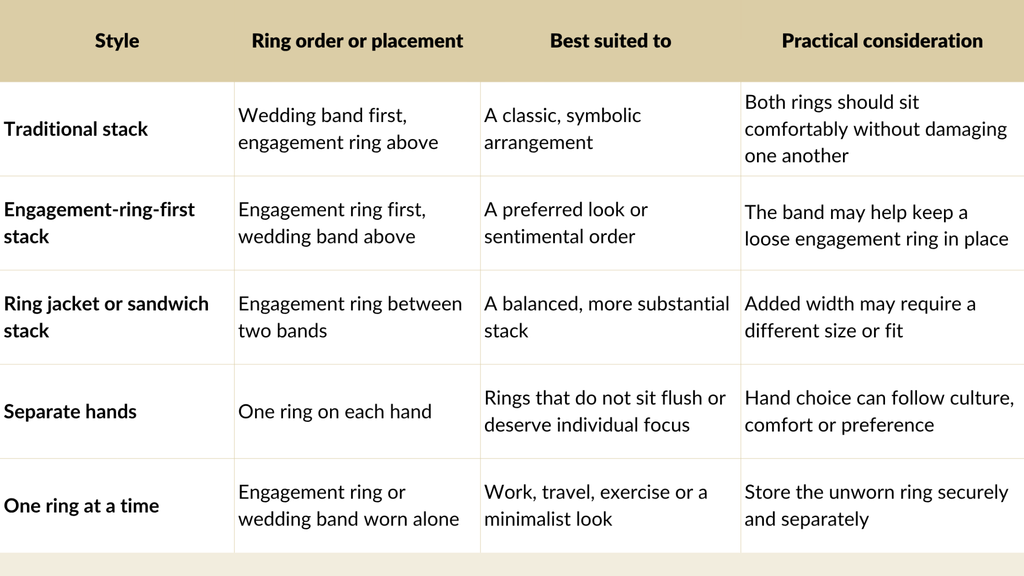
How to Wear Engagement Rings and Wedding Bands at a Glance
There are several elegant ways to arrange the two rings, each with practical advantages.
Comfort, design and personal meaning matter more than etiquette.
The Traditional Way to Wear Both Rings
The traditional approach remains popular in Canada, although cultural and personal variations are equally valid.
Which Ring Goes on First?
The wedding band traditionally goes on first, followed by the engagement ring. Keeping the band “closest to the heart” symbolizes the commitment made during the ceremony; it is not an anatomical rule. Reverse the order if another arrangement looks or feels better.
Which Hand and Finger?
In Canada, both rings are commonly worn on the fourth finger of the left hand.If you are deciding between left- and right-hand placement, our guide to which hand to wear an engagement ring on explains the traditions and practical options in more detail. Right-hand traditions vary by culture and religion, and some people simply choose the more comfortable hand. The same principles of meaning, fit and lifestyle apply to any wearer.
What Should You Do During the Wedding Ceremony?
To have the band placed directly on your finger, move the engagement ring to your right hand beforehand or leave it somewhere secure. Afterwards, return it to the left hand above the band. The officiant can also place the band above your engagement ring, allowing you to reorder both later. Share your preference in advance.
Modern Ways Women Wear Engagement Rings and Wedding Bands
When considering how women wear engagement rings and wedding bands today, design, comfort and lifestyle matter as much as tradition.
- Engagement Ring First: This can reflect its sentimental importance or suit its setting.
- Ring Jacket or Sandwich Stack: A wedding band and an anniversary band can frame the engagement ring for symmetry, contrast or extra brilliance.
- Separate Hands: This gives each ring visual space and prevents friction.
- One Ring at a Time: Wearing only the band or engagement ring may be more practical for travel, work or daily comfort.
You may also choose a full stack for special occasions and a single band for daily wear.
How to Make the Rings Sit Comfortably Together
A flush-fit wedding band sits closely against the engagement ring and often works with a raised centre setting. Low-set, elongated or unusual settings may need a curved or contoured band. A small, intentional gap can also look refined.
Consider the width, thickness and profile of both rings. A wider stack may feel tighter than either ring alone, so size both pieces together. Spinning, pinching, or persistent marks can indicate that adjustment is needed.
Constant contact can scratch metal, while exposed stones may damage a neighbouring ring. Professional fit advice is especially useful when pairing delicate pavé engagement rings.
How to Coordinate the Two Rings
Matching metals create a cohesive look, but mixed metals can offer deliberate contrast. Repeating one colour elsewhere in the stack can make the combination feel intentional.
A detailed engagement ring often suits a simple polished band, while solitaire engagement rings can pair with plain or diamond-set designs. Widths need not match: a fine band emphasizes the centre stone, while a wider band adds presence. Explore our gold band engagement ring styles for further inspiration.
When a standard band leaves awkward spacing around the centre setting, working with a custom engagement ring maker can produce a contoured pairing designed as one composition.
Daily Wear, Care and Safety
Remove both rings before high-impact exercise, heavy lifting, handling harsh chemicals or tasks that could trap or strike them. Store them separately in soft-lined compartments to reduce scratching.
Routine care should include:
- Gentle maintenance appropriate to the metals and gemstones;
- Professional cleaning and inspection, particularly around prongs and pavé; and
- Prompt attention to movement, snagging or distortion.
Our guide to cleaning gold jewellery explains safe at-home methods. If the stack becomes loose, tight or uncomfortable, our jewellery repair service can assess whether resizing or another adjustment is appropriate.
Find a Coordinated Ring Pair in Toronto
The most successful pairing considers beauty and wearability from the beginning. Browse our engagement rings in Toronto and wedding bands, then book an appointment to compare profiles, proportions and settings. We can help you find a comfortable combination or create a custom pairing.
The wedding-band-first arrangement remains a meaningful classic, but it is only one option. Whether you reverse the order, build a stack, separate the rings or wear one at a time, balance meaning with comfort and protection. Thoughtful fitting helps both rings look beautiful and remain enjoyable to wear.
Frequently Asked Questions
1. Which Goes First, the Engagement Ring or Wedding Band?
Traditionally, the wedding band goes first, and the engagement ring sits above it. Reverse the order if it feels better.
2. Can I Wear More Than One Wedding Band With My Engagement Ring?
Yes. One band on each side creates a ring-jacket effect. Check the total width and fit.
3. What Type of Wedding Band Works Best With a Low-Set Engagement Ring?
A curved, notched or custom-contoured band can fit around a low setting. A deliberate gap is another option.
4. Can an Engagement Ring and Wedding Band Have Different Metals?
Yes. Mixed metals create contrast. Have the pairing assessed if the rings will rub together daily.
5. Should My Engagement Ring and Wedding Band Be the Same Width?
No. Matching widths create continuity; contrasting widths emphasize one ring. Comfort and proportion matter most.
6. What Is a Flush-Fit Wedding Band?
A flush-fit band sits beside an engagement ring with little or no gap. Suitability depends on the setting.
7. Can I Add an Anniversary Band to My Engagement Ring Stack?
Yes. It can frame the engagement ring, sit above it or be worn separately. Recheck sizing as the stack widens.
8. How Should I Store My Rings When I Am Not Wearing Them?
Use separate soft-lined compartments or pouches to limit scratching and prevent loss.
9. When Should I Have Both Rings Professionally Checked?
Arrange an inspection if you notice movement, snagging, distortion or discomfort. Periodic checks help protect prong and pavé settings.