
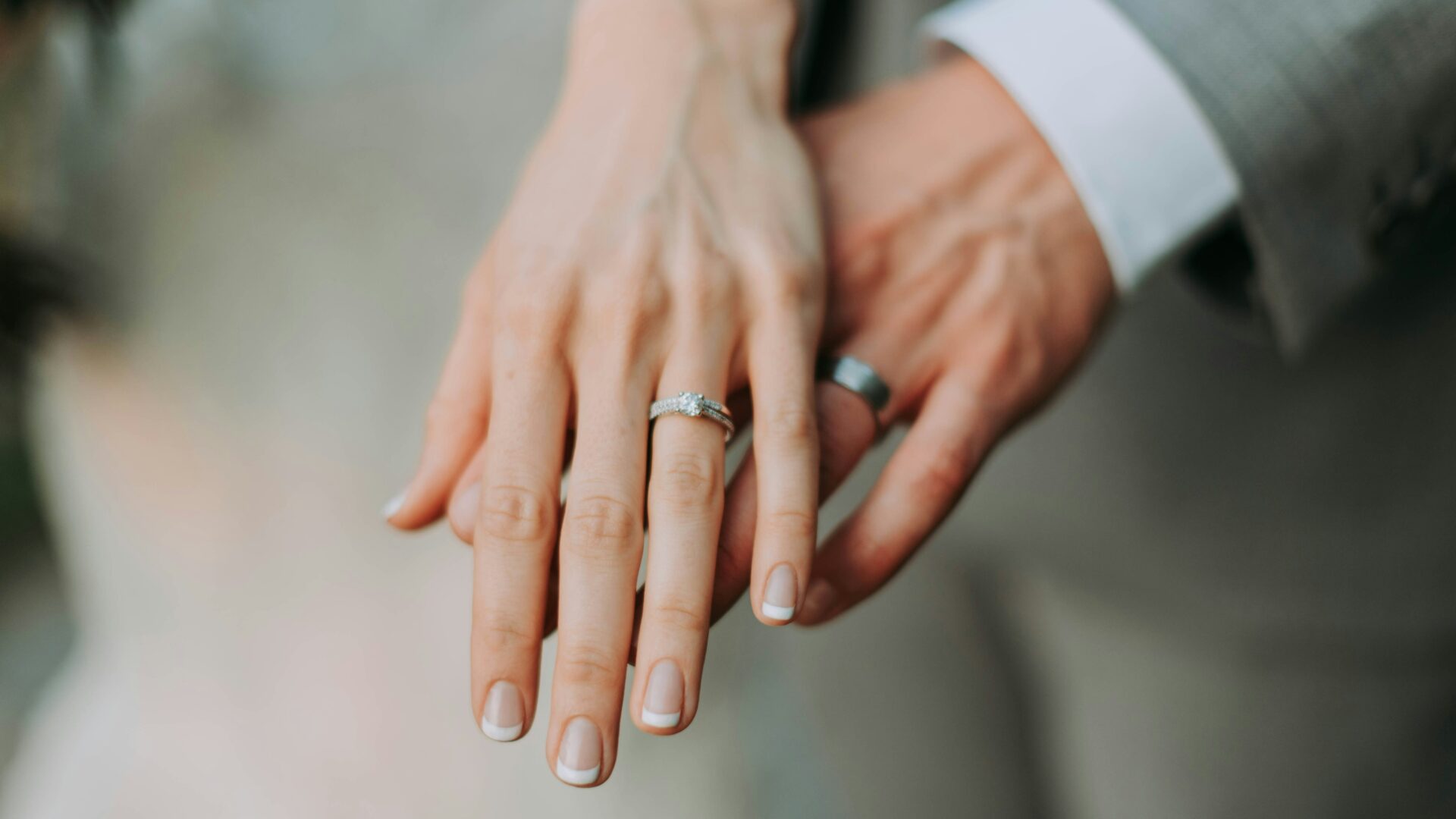
If you are wondering which hand an engagement ring goes on, the customary answer in Canada and much of North America is the left ring finger. This is a tradition, not a requirement. Cultural customs, comfort and personal meaning may lead someone to wear an engagement ring on the right hand or another finger.
Below, we explain the common placements, their history and practical options for the wedding ceremony and beyond.
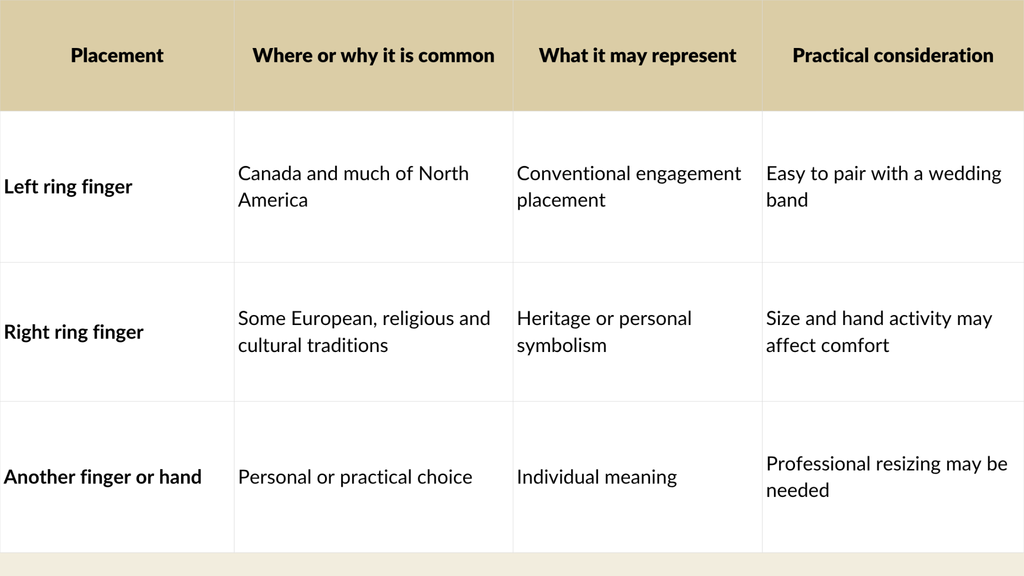
Engagement Ring Placement at a Glance
There is no legal or universal rule. Choose a placement that respects your traditions and feels secure.
Which Hand Does an Engagement Ring Go On in Canada
Canadian custom favours the left ring finger, but personal circumstances should guide the choice.
The Common Canadian Tradition
In Canada, an engagement ring is usually worn on the fourth finger of the left hand, known as the ring finger. When people wonder which hand engagement rings go on, the expected answer is the left.
This placement also makes it straightforward to coordinate the engagement ring with wedding bands after marriage. Many people wear both rings on the same finger.
Why the Left Ring Finger Became Traditional
The left ring finger has long been associated with the “vena amoris”, or “vein of love,” once believed to run directly to the heart. It is romantic symbolism, not anatomical fact: the ring finger has no unique vein to the heart.
Over time, the left ring finger became a familiar symbol of commitment in Canada and many other Western cultures.
Is the Left Hand Required?
No. Personal preference, cultural or religious custom, family tradition, work requirements and comfort can all influence where a ring is worn.
Engagement Ring Traditions Around the World
Ring customs vary across regions, communities and even individual families.
Right-hand traditions are common in parts of Europe and within certain religious and cultural communities. Some couples wear both rings on the right hand, while others move one or both after marriage. Customs may vary even within the same country.
Wearing a ring as parents or grandparents did may honour a shared heritage, while choosing a different placement can reflect a couple’s own story. Neither approach is more correct.
What Happens to the Engagement Ring at the Wedding Ceremony?
Couples have several practical options, and the right arrangement depends on ceremony plans, ring design and personal preference.
Traditionally, the wedding band is placed on the left ring finger first so that it sits closer to the heart, with the engagement ring worn above it. Before the ceremony, the engagement ring may be:
- Moved temporarily to the right hand
- Removed and kept in a secure place
- Left on the left hand, then reordered with the wedding band afterward
The engagement ring can return to the left finger after the ceremony, but the order is optional. Curved or unusually shaped bands may sit better in another arrangement. Comparing profiles helps rings rest together without rubbing or leaving an unwanted gap, whether pairing a band with a solitaire engagement ring or creating a coordinated custom engagement ring.
Can You Wear an Engagement Ring on the Right Hand?
Yes. Wearing an engagement ring on the right hand is a valid choice, whether it reflects culture, personal symbolism, comfort or practicality.
The right hand may align with family or religious tradition, work demands or personal comfort. It may also hold meaning in a same-sex relationship, a remarriage or an individual tradition, but no single interpretation should be assumed.
Corresponding fingers are not always the same size. A ring that fits on the left may pinch, spin or slip on the right. Our jewellery repair and ring sizing service can assess whether an adjustment is appropriate.
How to Choose the Best Hand for You
The ideal placement should balance meaning, comfort and protection. Consider:
- Culture: Is there a tradition you want to honour?
- Activity: Does your work or sport increase the risk of knocks or snagging?
- Comfort: Is the ring secure without pinching or turning?
- Pairing: Will you add a wedding band, and will the profiles sit together?
- Fit: Has the chosen finger been measured professionally?
Lifestyle can also influence the design. Lower-profile settings may suit active hands, while band width and stone height affect daily comfort. Reviewing gold band engagement ring styles can help you compare options. Appropriate care and cleaning of gold jewellery will then help preserve the finish and brilliance.
Find the Right Engagement Ring in Toronto
Placement should be considered before choosing the final size and design. At Samuel Kleinberg, we help clients compare engagement rings in Toronto, understand how different settings feel and coordinate a ring with a future wedding band.
We can also discuss style priorities and an appropriate engagement ring budget. Book an appointment to explore designs, confirm a comfortable fit and choose a ring that feels meaningful on whichever hand is right for you.
Choose the Placement That Feels Right
The left ring finger remains the familiar answer to which hand an engagement ring goes on in Canada, but it is a tradition rather than a rule. Cultural meaning, lifestyle, fit and personal preference all matter. Choose thoughtfully, and the ring can be worn comfortably and confidently through the engagement, ceremony and years ahead.
Frequently Asked Questions
1. Can an engagement ring be worn on any finger?
Yes. It can be worn on any finger that is meaningful, secure and comfortable.
2. Are corresponding fingers the same size on both hands?
Not necessarily. Have the intended finger measured before changing placement.
3. Can you wear an engagement ring on your dominant hand?
Yes, but consider whether the ring will face more knocks, friction or snagging.
4. Should the fit change depending on the hand?
It should pass over the knuckle with slight resistance and sit securely without pinching or spinning. The required size may differ between hands.
5. Can you wear an engagement ring without a wedding band?
Absolutely. A wedding band is optional before and after marriage.
6. Does the hand have a specific meaning?
Meanings vary. The left hand often reflects Canadian convention; the right may reflect another tradition or preference.
7. Can couples follow different cultural traditions?
Yes. Each partner may honour their own heritage, beliefs and comfort; their rings need not be on matching hands.
8. What should you consider before switching fingers?
Check fit, comfort and daily wear. If the ring slips, pinches or turns, arrange professional sizing.