
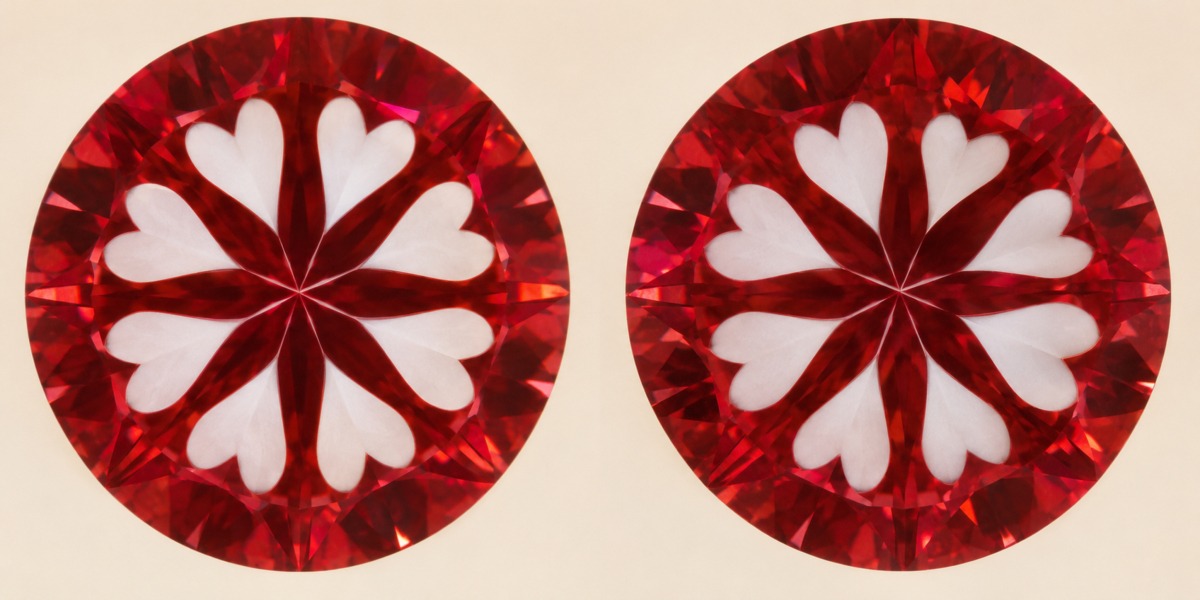
A seller tells you a diamond is “hearts and arrows,” and suddenly the price is higher, and the stone sounds special. But you can’t see hearts when you look at it, and the grading report doesn’t seem to mention them anywhere.
A hearts and arrows diamond is a round brilliant cut so precisely that, under a special viewer, its reflections line up into a pattern of arrows from the top and hearts from the bottom. That precision is real and worth knowing about, but the pattern is one piece of evidence, not a verdict on how well the whole diamond is cut or how it will look on your hand.
This guide explains how the pattern is viewed, how it relates to a report’s grades, what to ask for in photos, and when paying extra makes sense.
What Is a Hearts and Arrows Diamond?
A hearts and arrows diamond isn’t a separate gemstone, and it has nothing to do with a heart-shaped cut. The term describes a round brilliant whose facets are aligned so precisely that their reflections form a repeating, even pattern when the stone is placed in a suitable viewer.
Not every round brilliant can show it. The pattern depends on both the diamond’s proportions and the alignment of its facets, so two stones with the same carat weight, colour, and clarity can look very different under the same viewer. “Hearts and arrows” is best read as a description of cutting precision, often used in marketing, rather than an official grade.
How the Hearts and Arrows Pattern Is Viewed
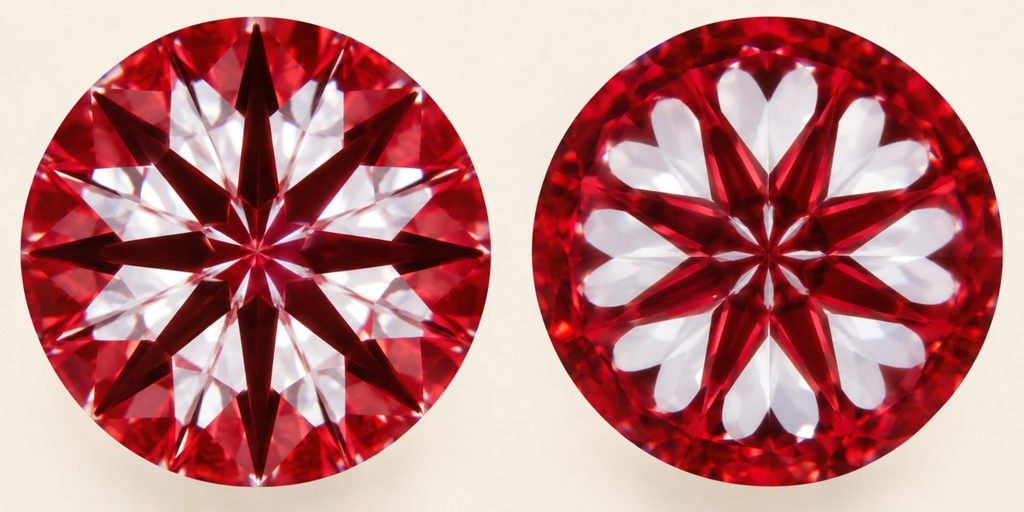
You need a viewer to see the pattern, because it’s made of reflections that normal lighting washes out. A hearts and arrows scope lights the diamond from above with white light and colours the light coming from the sides, so the reflections stand out clearly.
The diamond is viewed two ways:
- Crown Up (Arrows): Looking face-up through the table, you see eight arrow shapes formed by reflections of the main pavilion facets, spaced evenly around the stone.
- Pavilion Up (Hearts): Turned face-down, the stone shows a ring of small heart shapes, formed by reflections of the pavilion facets seen through the back of the stone.
The hearts view needs the pavilion exposed, which is why the clearest evidence comes from images taken while the diamond is loose. Lighting, viewer type, and camera angle all change how complete the pattern looks, so images should be taken in a consistent way if you’re comparing stones. A home test with a phone flashlight or a toy viewer won’t tell you much; treat the pattern as something an experienced jeweller or lab documents and explains.
Optical Symmetry vs. a Report’s Symmetry Grade
Four separate ideas tend to get blended together here, and keeping them apart makes the paperwork much easier to read:
- Optical Symmetry: How evenly the reflections line up when the stone is seen in a viewer. This is what the hearts and arrows pattern shows.
- Physical Symmetry: How precisely the facets themselves are shaped and aligned with one another. This is what a report’s symmetry grade measures.
- Polish: How smooth each facet’s surface is, graded separately from symmetry.
- Overall Cut Grade: A summary of how the diamond performs and is made. For round brilliants, the Gemological Institute of America (GIA) cut grade weighs seven components, including brightness, fire, scintillation, weight ratio, durability, polish, and symmetry, on a scale from Excellent to Poor.
An Excellent symmetry grade means the facets are well aligned, which is a good sign. It isn’t automatic confirmation of a complete hearts and arrows pattern, though, because the pattern also depends on proportions and on very small differences between matching facets. You’ll need images of the actual stone to confirm it.
Does the Pattern Guarantee Better Sparkle?
Precise alignment helps a diamond look even and orderly, but sparkle comes from several things working together. Brightness (white light returned to your eye), fire (flashes of colour), scintillation (the sparkle and contrast as the stone moves), and the proportions behind all three decide how a diamond actually looks.
That’s why the pattern can’t promise the best appearance on its own. GIA researchers have cautioned against focusing on a single appearance, such as hearts and arrows, to the exclusion of everything else, noting that personal taste matters too. Some buyers love the crisp, even look of a precisely aligned stone; others prefer a diamond with slightly different proportions that looks brighter or bolder to their eye.
The most reliable test is still your own. View a shortlist side by side, in daylight and under store lights, and notice which stone holds your attention as you move it.
What to Check in Actual Diamond Images
A sample image of “a hearts and arrows diamond” tells you nothing about the stone you’re buying. Ask for images of the exact diamond, ideally taken loose, and check a few things:
- Same Stone: The images should be tied to the specific diamond, with its report number or other identifying details.
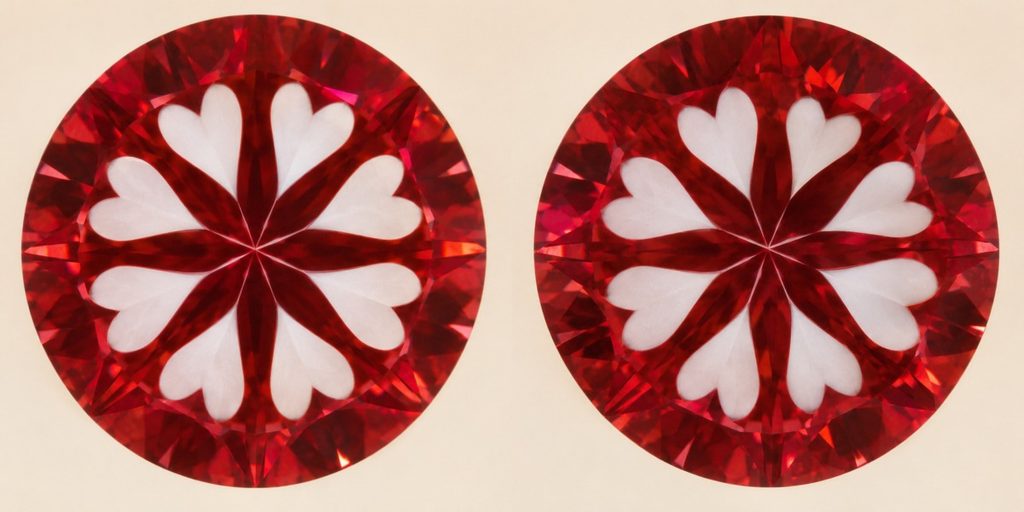
- Both Views: Look for a crown-up arrows image and a pavilion-up hearts image, taken with a proper viewer.
- Consistent Alignment: The arrows should be evenly spaced, and the hearts similar in size and shape all the way around.
- Seller Criteria: Ask what standard the seller uses to call a diamond hearts and arrows, and whether that standard is written down.
An image that shows uneven hearts, a missing arrow tip, or a slightly twisted pattern isn’t a failing grade. Small variations are common, and photos can exaggerate or hide them. Treat any irregularity as a reason to ask an expert to look at the stone and explain what you’re seeing, rather than as a pass-or-fail certificate.
Compare the Pattern with the Full Grading Report
The pattern speaks to cutting precision. The grading report covers everything else, and it’s the document that identifies the stone. Read it alongside a diamond grading chart so the grades make sense, then check:
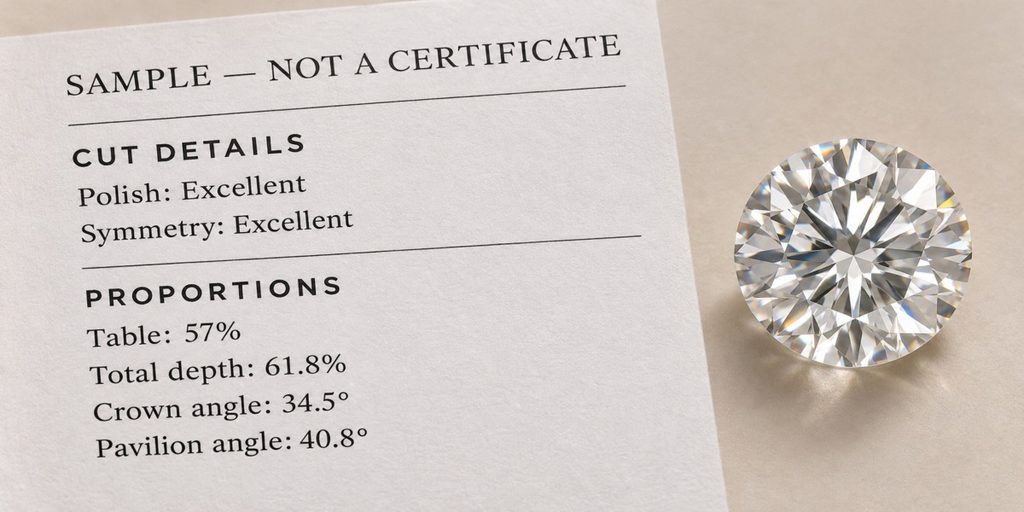
- Cut: The overall cut grade, plus the polish and symmetry grades.
- Proportions: Table size, crown angle, pavilion angle, and depth, which shape how the stone handles light.
- Colour, Clarity, and Carat: The grades that drive most of the price difference between similar stones.
- Report Identity: The report number, measurements, and carat weight should match the diamond you’re shown.
For a GIA report, you can confirm the details with GIA Report Check by entering the report number. A brand name, a Hearts and Arrows certificate from the seller, or a laser inscription is useful, but none of them replaces an independent grading report.
Is a Hearts and Arrows Premium Worth Paying?
A Hearts and Arrows label can add to the price, and it’s worth separating three things you might be paying for: the cutting precision itself, the branding around it, and whether you can actually see a difference you like.
The fairest way to judge it is to compare like with like. Gather quotes in Canadian dollars for two or three diamonds with the same carat weight, colour, clarity, and cut grade, one with documented hearts and arrows imaging and others without, and note the date on each quote, since diamond pricing moves. If the gap is small and you love the look, the precision may be worth it to you. If the gap is large, you might put that money toward size, colour, or the setting instead.
The decision gets bigger as carat weight rises, because any premium is multiplied across a more expensive stone. The same trade-offs come up when choosing a 3-carat diamond ring, where small differences in grades add up quickly. Don’t count on a hearts and arrows label to raise what the diamond is worth later; buy it because you like what it shows you today.
Choosing a Diamond Ring with Samuel Kleinberg
A practical shortlist starts with documentation and ends with your own eyes. Ask for the report and stone-specific images for each candidate, set aside any stone whose paperwork doesn’t match, and then view the remaining diamonds in person.
When you see them in person, look under more than one kind of light: bright store lighting, softer daylight near a window, and dimmer light like a restaurant. Precise cutting tends to show its character as the stone moves, so tilt and turn each diamond rather than judging it standing still.
Not every diamond is cut to show a complete hearts and arrows pattern, and plenty of beautiful diamond rings are built around stones that aren’t marketed that way. Start with the look you want, the documentation you need, and your budget. If you’re comparing engagement rings in Toronto, ask which stones have pattern images available, and judge them against the others on the same terms.
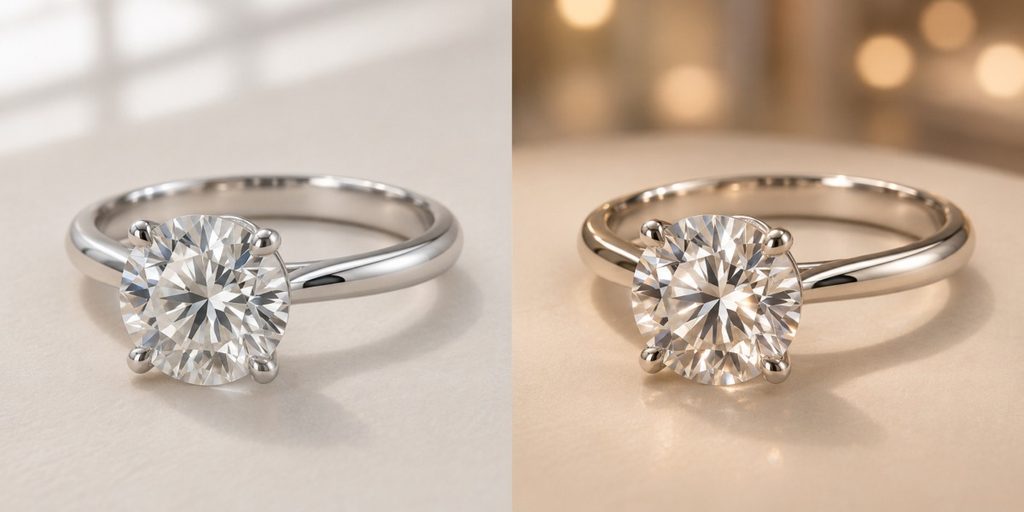
Finding the Right Hearts and Arrows Diamond for You
A hearts and arrows diamond is a round brilliant cut with unusual precision, and the pattern is good evidence of that care. It still works best as one part of the decision, alongside the grading report, stone-specific images, and how the diamond looks to you in real light.
If you’d like help reading a report or comparing diamonds side by side, you can book a time to view diamonds with Samuel Kleinberg and see the differences for yourself before you choose.
Frequently Asked Questions
1. Can a lab-grown diamond display hearts and arrows?
Yes. The pattern comes from how precisely a diamond is cut, not where it was grown, so a laboratory-grown round brilliant cut to the same standard can show it. That also means the pattern can’t tell you whether a stone is natural or lab-grown; only a grading report and lab testing can confirm origin.
2. Can a mounted diamond still have a complete hearts photograph taken?
Usually not a reliable one. The hearts are viewed through the pavilion, and once a diamond is set, prongs, the head, and the setting’s gallery block much of that view. If the pattern matters to you, ask for hearts and arrows images taken before the stone was set, and keep them with your report.
3. Does a hearts-and-arrows inscription prove the diamond has not been switched?
No. An inscription or a pattern image is one helpful match point, but neither proves identity on its own. To confirm you have the same stone, have a jeweller or gemologist compare the report’s details, such as measurements, carat weight, and clarity characteristics, with the diamond itself.