
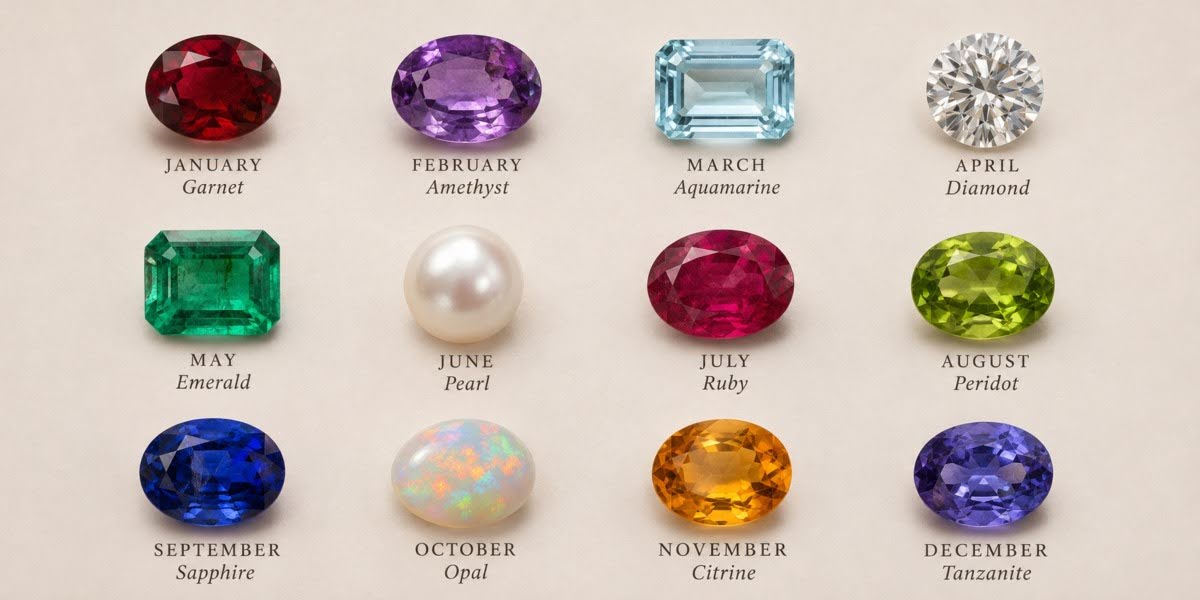
Most people know their birthstone as a single colour: red for January, purple for February, blue for September. Then they start shopping and find green garnets, pink sapphires, and three different stones for June.
That’s because birthstones by month are really a short list of gem materials, and each one comes in more colours and with more care needs than its reputation suggests. Choosing well means looking past the symbolism to what the stone can actually handle: a ring worn every day asks far more of a gem than a pendant or a pair of earrings.
This guide gives you a quick reference chart, then walks through each month’s stones, what tradition says about them, and how they hold up to everyday wear.
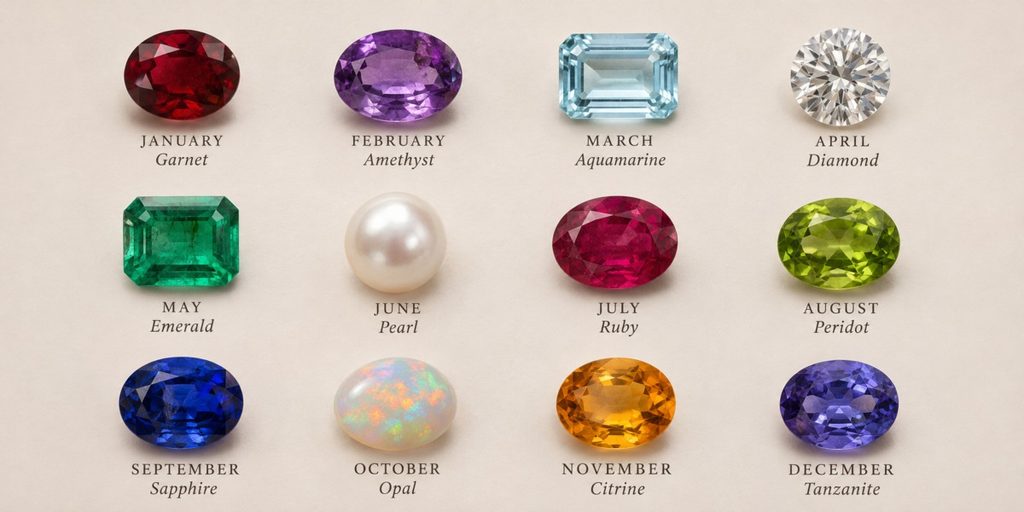
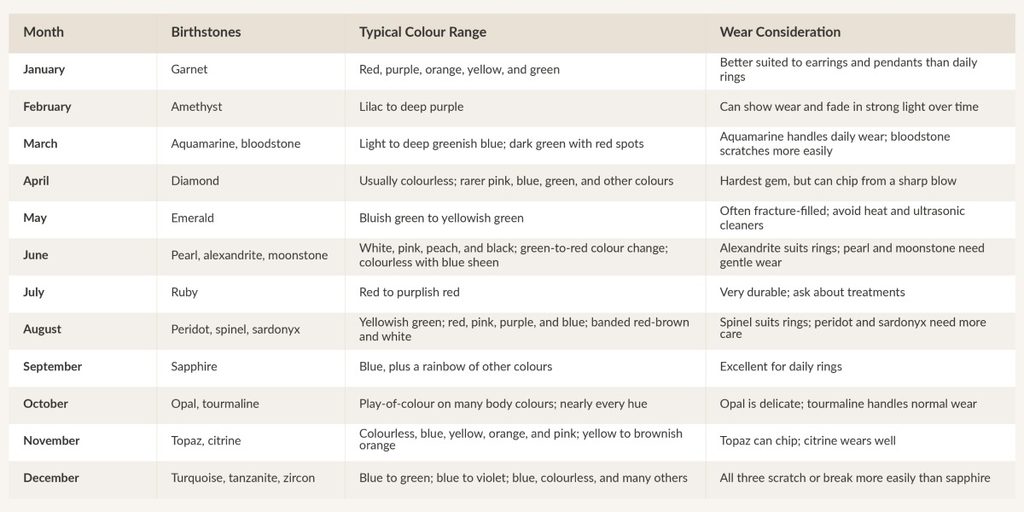
Birthstones by Month: A Quick Reference Chart
This chart follows the modern list most North American jewellers use. Some months have more than one recognized stone, and older or regional lists can differ, which is covered further down.
January to March: Garnet, Amethyst, Aquamarine, and Bloodstone
The first three months cover a surprising spread of materials, from a whole family of minerals to an opaque stone with red flecks.
January: Garnet
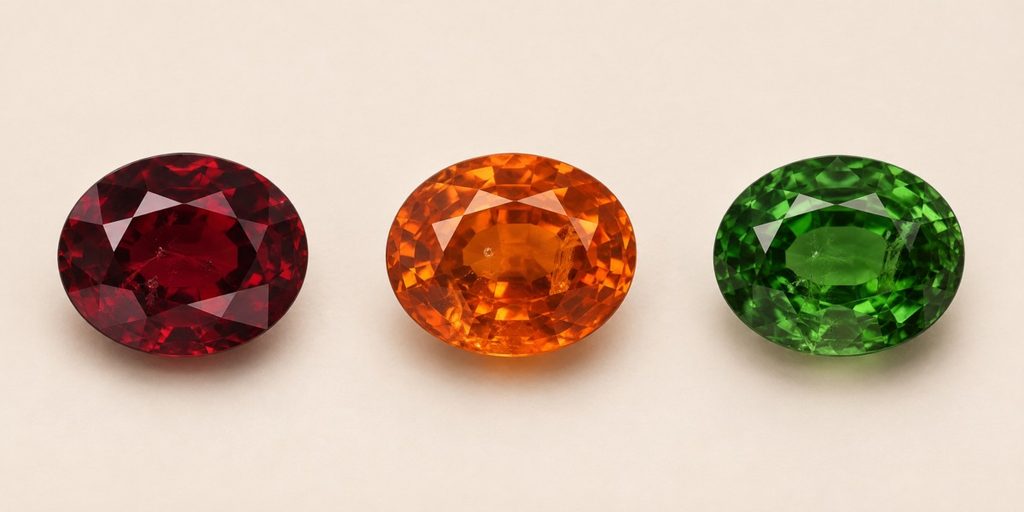
Garnet isn’t one gem but a group of related minerals, so the “red stone” reputation only tells part of the story. Garnets also come in orange, yellow, purple, and vivid green, including the green varieties tsavorite and demantoid. The name comes from the medieval Latin word for pomegranate, and some people believe it brings wealth and happiness.
At 6.5 to 7.5 on the Mohs scale, garnet scratches more easily than ruby, sapphire, or diamond. It shows off well in earrings, pendants, and brooches, and it should be stored away from harder gems.
February: Amethyst
Amethyst is the purple variety of quartz, ranging from pale lilac to deep purple. Its name comes from a Greek word tied to the old belief that it prevented drunkenness, and later lore claimed it kept the wearer clear-headed in battle and business.
With a hardness of 7, amethyst works in everyday rings, though it may need repolishing over the years. Some amethyst fades with long exposure to strong light, so it’s worth keeping it out of the sun when you’re not wearing it.
March: Aquamarine and Bloodstone
March has two very different stones. Aquamarine ranges from light, slightly greenish blue to deeper green-blue, and sailors once believed it would calm waves and keep them safe at sea. Bloodstone is an opaque dark green jasper with red spots of iron oxide, traditionally linked with strength and good luck.
The practical difference is durability. Aquamarine rates 7.5 to 8 and is durable enough for everyday wear, while bloodstone, at 6.5 to 7, is better kept away from harsh chemicals, high heat, and harder gems that can scratch it.
April to June: Diamond, Emerald, and June’s Three Alternatives
These months include the hardest gem on the list, one of the most often treated, and a month with three stones that need very different care.
April: Diamond
Most people picture a colourless diamond, but natural diamonds occur in every colour, with pink, blue, and green among the rarest and most valuable. The name comes from the Greek “adamas,” meaning invincible, and tradition has linked diamond with strength, clarity, and long life.
Diamond is a 10 on the Mohs scale, which makes it the most scratch-resistant gem on this list and a natural fit for diamond rings worn every day. It can still chip or cleave from a hard knock, especially at a thin edge or sharp point, so a jeweller should check the setting from time to time.
May: Emerald
Emerald ranges from bluish green to slightly yellowish green, depending partly on where it was mined. Legend credits it with making the wearer more intelligent and quick-witted, and it has long been associated with rebirth and renewal.
The big buying question is treatment. Many emeralds have surface-reaching fractures filled with oil, wax, or resin to improve their look, and those fillers can be damaged by heat, harsh chemicals, or an ultrasonic cleaner. Ask what treatment a stone has had, and clean it only with warm, soapy water and a soft brush.
June: Pearl, Alexandrite, and Moonstone
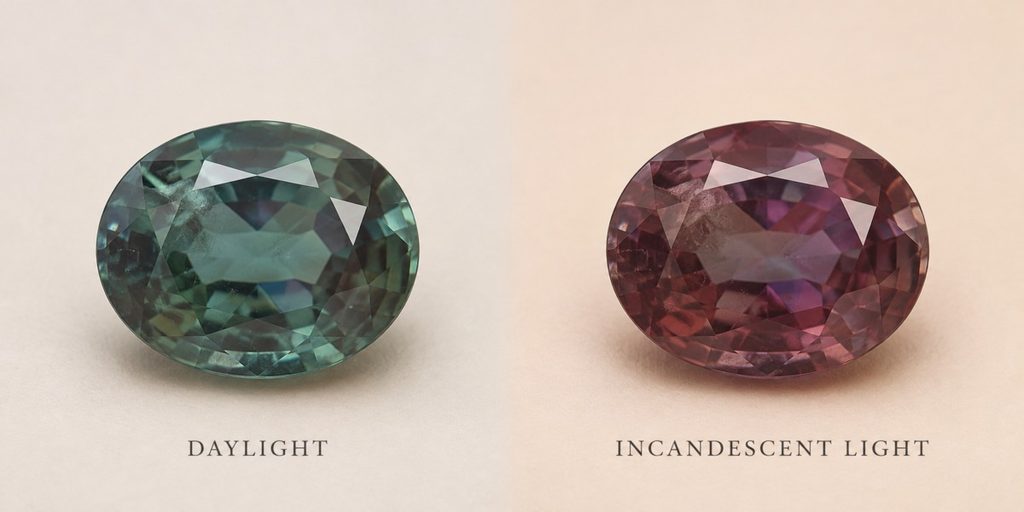
June offers three stones with very different personalities. Pearls come in white, pink, peach, and dark Tahitian shades and are traditionally linked with purity and humility. Alexandrite shifts from green or bluish green in daylight to red or purplish red under incandescent light. Moonstone is prized for a soft blue sheen over a colourless body and is associated with love and luck.
Their care needs couldn’t be more different. Pearls rate only 2.5 to 3 and should go on after perfume and hair products. Moonstone has poor toughness and shouldn’t go near ultrasonic or steam cleaners. Alexandrite, at 8.5 with excellent toughness, is the June choice for a ring worn daily.
July to September: Ruby, August’s Alternatives, and Sapphire
Colour and identity don’t always line up in these months. Ruby and sapphire are the same mineral, corundum, in different colours, while August’s three stones are entirely separate materials.
July: Ruby
Ruby is red corundum, from deep red to purplish red; the more chromium, the stronger the red. In ancient India, it was called the king of precious stones, and medieval Europeans associated it with wisdom, wealth, and success in love.
Ruby is second only to diamond in hardness, so it’s an excellent everyday stone. Treatments matter here, though: heat treatment is common and stable, while glass-filled or dyed rubies are more fragile and should only be cleaned with a damp cloth.
August: Peridot, Spinel, and Sardonyx
August’s three stones share a month but nothing else. Peridot is yellowish green to greenish yellow and was believed to protect against evil spirits. Spinel comes in red, pink, orange, purple, violet, and blue. Sardonyx layers brownish red sard with white or black onyx and has been linked with courage and clear communication.
For a ring, spinel at 8 on the Mohs scale is the most durable choice of the three. Peridot isn’t recommended for daily wear in a ring and can crack from sudden temperature changes, while sardonyx is often dyed, so heat during repairs can alter its colour.
September: Sapphire
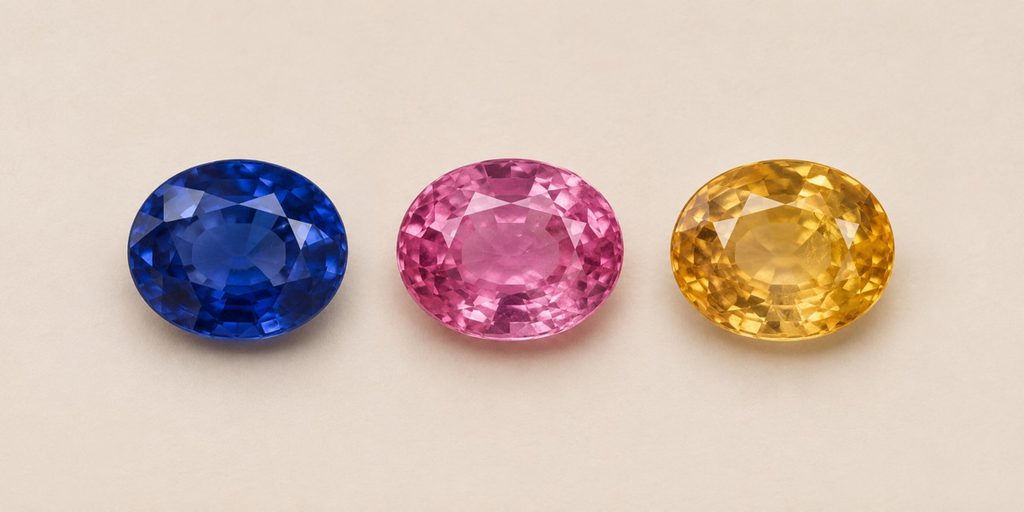
Sapphire is best known in blue, but the same mineral comes in a rainbow of other colours; only the red variety is called ruby instead. Sapphire has traditionally symbolized sincerity, truth, and faithfulness, and medieval clerics wore it as a symbol of Heaven.
At 9 on the Mohs scale, with excellent toughness and no cleavage, sapphire is one of the best gems on the list for rings worn every day. As with ruby, ask how a stone was treated: fracture-filled or dyed sapphire can be damaged by mild acids like lemon juice.
October to December: Opal, Tourmaline, and Late-Year Birthstones
The last three months have seven stones between them, with some of the widest gaps in durability on the whole list.
October: Opal and Tourmaline
Opal is famous for play-of-colour, flashes of rainbow hues that shift as the stone moves, over body colours from white to chocolate brown and fiery orange. Europeans linked it with hope and truth. Tourmaline covers nearly every colour, from pink rubellite to green chrome tourmaline and neon blue Paraíba, and different colours carry different associations, such as compassion for pink.
The care gap is wide. Opal rates 5 to 6.5 and can crack from heat or sudden temperature changes, so it’s safest in earrings or pendants. Tourmaline, at 7 to 7.5, is generally suitable for everyday wear, though ultrasonic and steam cleaning aren’t recommended.
November: Topaz and Citrine
Topaz comes in colourless, light blue, yellow, orange, pink, violet, and brown, plus the pinkish orange imperial topaz. Most blue topaz is colourless topaz that has been irradiated and heated. Citrine is yellow to brownish orange quartz, and much of it on the market is heat-treated amethyst. Traditional lore credits topaz with strength and citrine with calming the wearer.
Topaz is hard at 8 but has poor toughness, so it can chip or crack from a knock or sudden heat. Citrine, at 7 with good toughness, is usually durable enough for normal wear, but skip steam cleaning.
December: Turquoise, Tanzanite, and Zircon
Turquoise is an opaque blue to green stone, often veined with its host rock, and was believed to bring good fortune and protect riders from falls. Tanzanite is blue to violet and is usually heat-treated brownish zoisite. Zircon comes in blue, colourless, red, orange, yellow, brown, and green, and medieval lore said it could ward off evil spirits.
Zircon is a natural gem, not to be confused with cubic zirconia, a man-made diamond simulant with a similar name. None of December’s stones are especially tough. Turquoise rates only 5 to 6 and may be treated with resin; tanzanite abrades easily; and zircon tends to abrade too, so all three suit earrings and pendants better than daily rings.
What Birthstone Meanings Can, and Cannot, Tell You
Birthstone meanings are cultural traditions, not tested effects. They tell you how people in different times and places thought about a gem, and they can make a gift more personal, but they don’t change what a stone is made of or how it behaves.
The lists themselves have also changed. The first official list dates to 1912, with alexandrite, citrine, tourmaline, and zircon added in 1952, tanzanite in 2002, and spinel in 2016. Even today, trade groups and retailers don’t agree on every month, so you may see bloodstone, moonstone, or blue topaz included on one list and left off another.
The practical takeaway is that you have room to choose. If a month offers more than one stone, pick the one whose colour you love and whose durability matches how you’ll wear it.
Which Birthstones Suit Rings Worn Every Day?
A ring takes far more knocks than a pendant or a pair of earrings, so it needs a gem that holds up on three fronts. Hardness, toughness, and stability each measure something different:
- Hardness: Resistance to scratches, measured on the Mohs scale. A high number alone doesn’t guarantee a stone won’t break.
- Toughness: Resistance to chipping and breaking. Topaz is hard but has poor toughness, while alexandrite and sapphire score well on both.
- Stability: Resistance to heat, light, chemicals, and humidity. Some amethyst fades in strong light, and opal can crack with sudden temperature changes.
On those measures, diamond, ruby, sapphire, alexandrite, and spinel are the strongest everyday ring choices, with aquamarine, citrine, and tourmaline close behind. Opal, pearl, moonstone, tanzanite, turquoise, and peridot are better saved for earrings, pendants, or rings worn on special occasions.
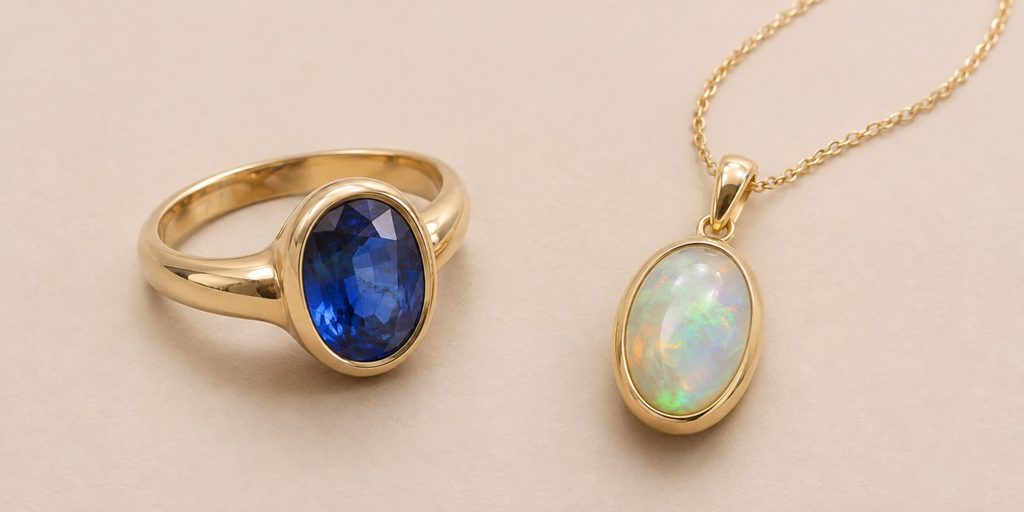
Treatments and settings matter too. A fracture-filled stone needs gentler care than an untreated one, and a bezel or partial bezel protects a stone’s edges better than tall prongs. If you’re drawn to a coloured centre stone for a bridal ring, the same rules apply to non-traditional engagement rings, where tough gems such as sapphire and ruby make the most sense.
Choosing a Meaningful Birthstone Design in Toronto
A good birthstone piece starts with four questions: which colour you love, what kind of jewellery you’ll wear most, how much you want to spend, and whether an existing design fits or you’d rather have one made.
- Preferred Colour: Start with the shade, not just the month. A pink sapphire, a green garnet, or a blue zircon can all represent a birth month while giving you a very different look.
- Jewellery Type: Match the stone to the piece. Softer or more fragile stones suit earrings and pendants, while daily rings call for tougher gems and protective settings.
- Budget: Price depends on the gem, its size and quality, any treatments, and the metal. Several months offer an alternative stone that costs less without losing the meaning.
- Custom Consultation: A custom piece lets you choose the stone, the setting, and how it’s protected, and it’s the easiest way to combine meaning with durability.
For bridal pieces, the process works much the same way as custom engagement ring design: you choose the stone and setting together, so the design protects the gem you’ve picked. Availability varies by stone, size, and colour, so ask a jeweller what can be sourced before you settle on a design. If you’re comparing engagement rings in Toronto and want a birthstone accent, ask how the accent stone is set and whether it suits daily wear.
Finding Your Birthstone by Month and Wearing It Well
Knowing your birthstone by month gives you a starting point, not a single answer. Choose the stone and colour that mean something to you, then let durability decide whether it belongs in a ring you’ll wear every day or a piece you’ll save for special occasions.
When you’re ready to turn a birthstone into a ring or a custom piece, you can talk through stone and setting options with Samuel Kleinberg and get advice on what will suit the way you live.
Frequently Asked Questions
1. Can I combine family members’ birthstones in one piece?
Often, yes, but it takes a bit of planning. Each stone needs a setting that suits its hardness and size, and softer stones like opal or pearl may need more protection when they sit beside harder gems. A jeweller can confirm whether the layout works and what each stone can be sourced in before you commit.
2. Are zodiac stones the same as monthly birthstones?
No. Zodiac stones follow astrological signs, which run roughly from the 20th of one month to the 20th of the next, so they don’t line up with calendar months. Different traditions also assign different stones to each sign, so a zodiac stone may not match your birth-month list at all.
3. Can a laboratory-grown gemstone represent my birth month?
Yes. A lab-grown ruby or sapphire has essentially the same chemical, physical, and optical properties as a natural one, so it can carry the same meaning for you. What matters is clear disclosure: the seller should say whether a stone is natural, lab-grown, or a simulant (an imitation made of a different material), and you should get that in writing.