
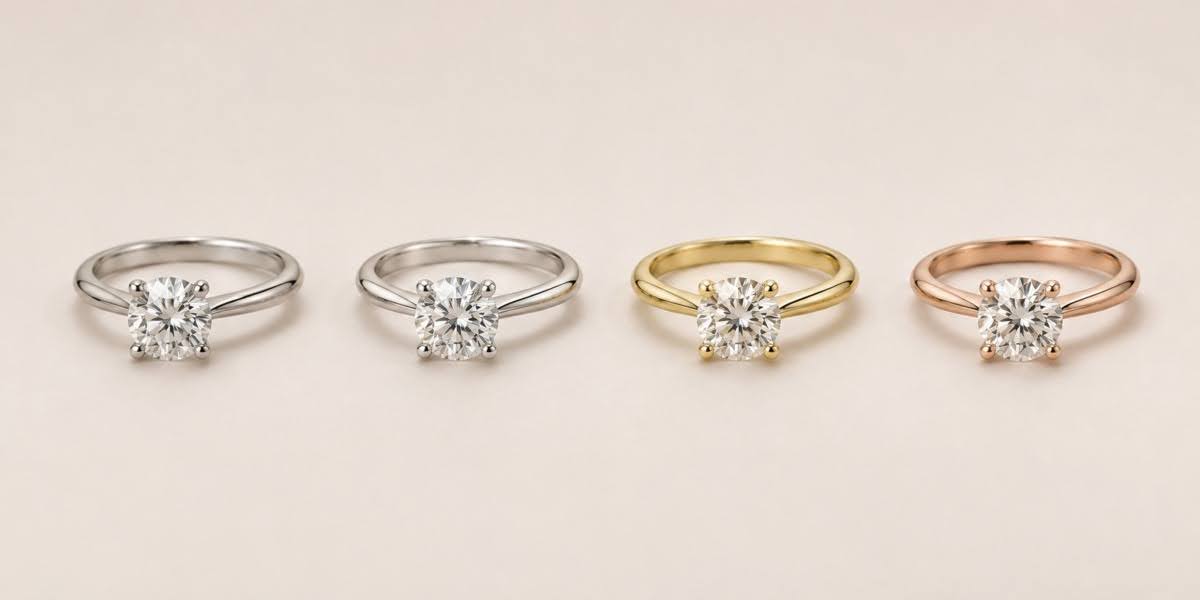
If you’re choosing a ring you’ll wear every day, you’ve probably heard both claims: platinum lasts forever, and gold is the practical choice. Neither is the whole story, because “gold” covers several alloys with different colours and habits, and a well-made gold ring can outlast a poorly made platinum one.
When you weigh platinum against gold, the better metal depends on your routine, your budget, and how much upkeep you’re happy to do. Platinum is heavier, naturally white, and wears differently over time. Gold comes in more colours and karats, weighs less, and often costs less upfront, though not always.
This guide compares the two side by side, explains how each one wears and what upkeep it needs, and gives you the questions to ask before you buy.
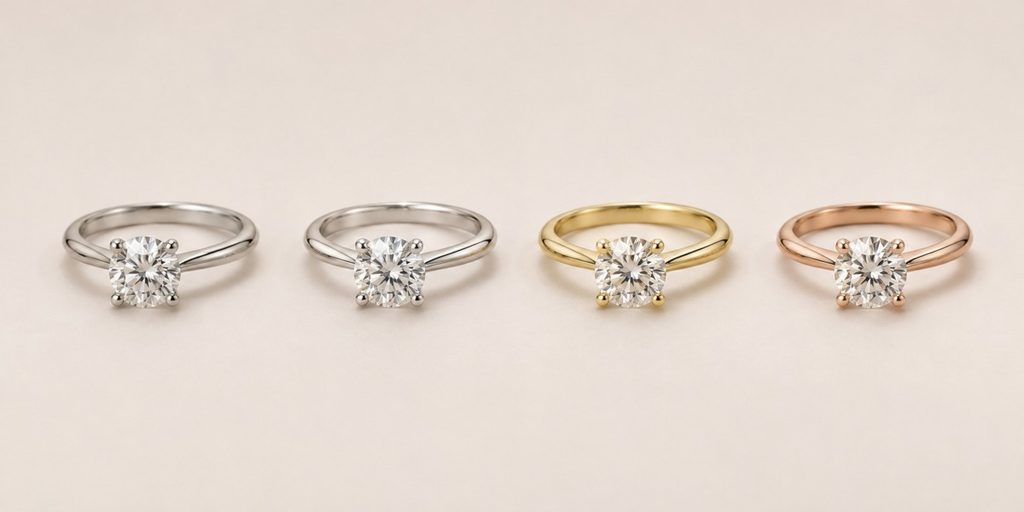
Platinum vs. Gold at a Glance
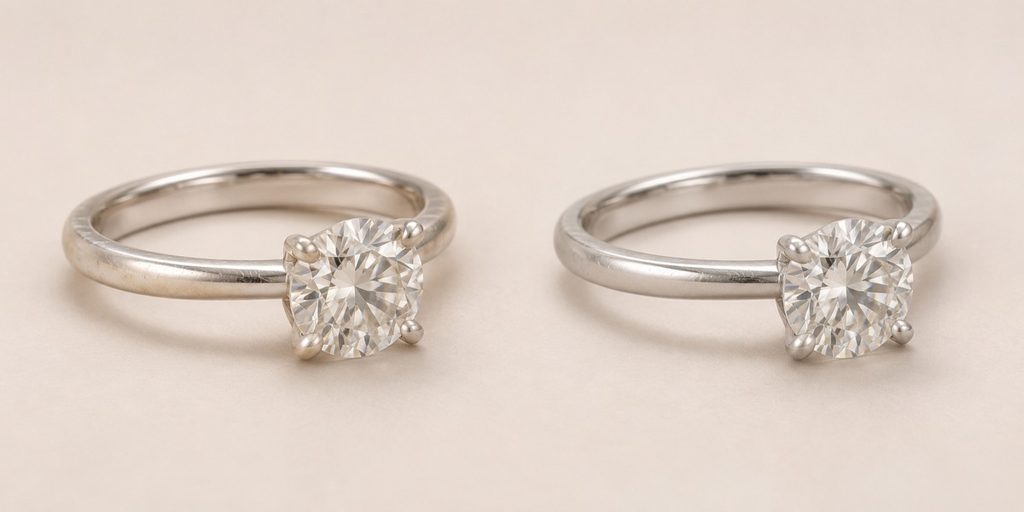
The quickest fair comparison holds the ring design steady: same width, thickness, and setting, made in each metal.
What Platinum and Gold Alloys Actually Contain
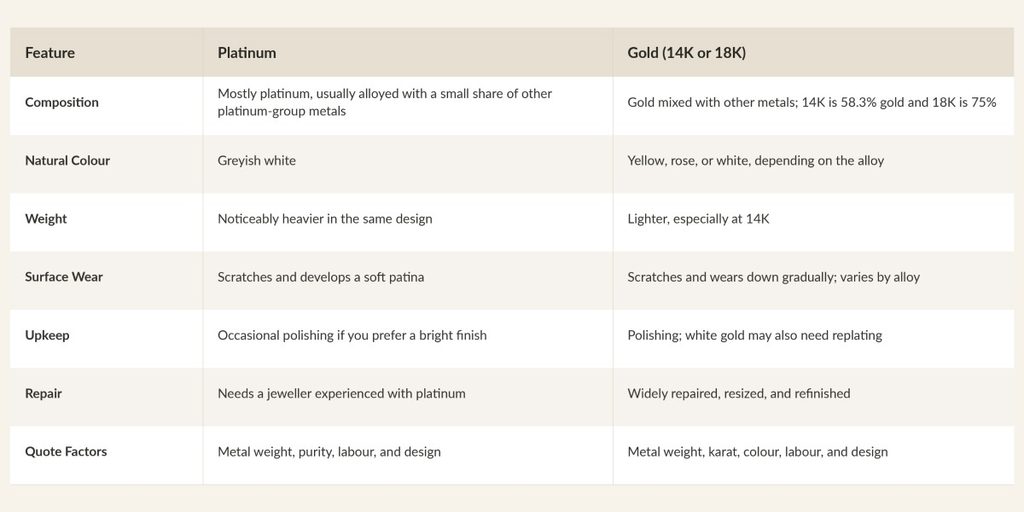
Neither metal is used in its pure form for most rings. Platinum jewellery is usually a high-purity alloy: in Canada, the word “platinum” on its own is reserved for metal that’s at least 95% platinum, or platinum combined with iridium or ruthenium to reach that level. You may also see lower-purity alloys marked with a number, such as 900 or 850 Plat, which tell you the platinum content in parts per thousand.
Gold works differently. Solid gold doesn’t mean 24K pure gold; it means gold alloy throughout, measured in karats. A 14K ring is 58.3% gold and an 18K ring is 75%, with the rest made up of other metals that add strength and set the colour.
That alloy recipe matters as much as the karat. Two 14K white gold rings can behave differently depending on whether the white gold is alloyed with nickel or palladium, so ask what’s in the metal, not just what number is stamped on it.
Scratches, Dents, and Patina: Different Types of Wear
“Durable” can mean three different things, and platinum and gold perform differently on each:
- Hardness: Resistance to fine scratches. Every ring metal scratches with daily wear, platinum included.
- Toughness: Resistance to dents, bending, and breaking. Thicker bands and well-made prongs matter more here than the metal name.
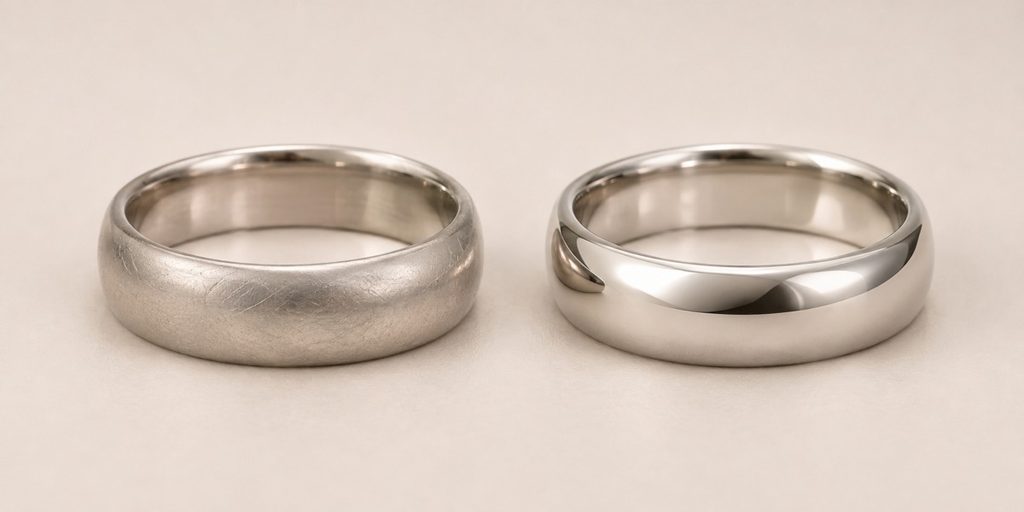
- Material Loss: Whether wear removes metal or moves it around. Platinum is very wear-resistant and develops a patina as fine scratches build up, while a gold band can slowly wear thinner over many years of wear and polishing.
Neither result is “better” in every case. Some people love platinum’s soft, matte patina; others prefer to have it polished back to a bright finish now and then. Gold alloys also differ from each other, so a blanket claim that one metal is always harder doesn’t hold up.
White Gold vs. Platinum: Colour and Rhodium Maintenance
If you want a white metal, this is the comparison that matters most. Platinum is naturally white all the way through, so its colour doesn’t change as it wears.
White gold is gold alloyed with whiter metals, and many white gold rings are finished with a thin layer of rhodium plating for a brighter look. That rhodium wears away gradually, so the ring needs replating occasionally to keep the same bright colour. How often depends on the alloy, how much the ring rubs against things, and your own habits, so there’s no fixed schedule that applies to every ring.
Not all white gold behaves the same way. Some alloys are whiter to begin with and show less contrast as the plating wears, while others look warmer underneath. If you’re comparing two white gold rings, ask whether each is plated and what the metal looks like without it.
Weight, Comfort, and Skin Sensitivities
Weight is one of the clearest differences you’ll feel. Pure platinum has a density of about 21.45, compared with 19.3 for pure gold, and karat gold is lighter still because of the other metals in the alloy. In the same design, a platinum ring feels noticeably heavier on the hand.
Some people like that substantial feel; others find a lighter ring more comfortable to wear all day. Comfort also depends on width, the inside profile (a rounded comfort-fit inner edge feels different from a flat one), and how well the ring fits, so try identical designs in each metal if you can.
For sensitive skin, the alloy constituents matter more than the metal’s name. People with a nickel allergy should avoid white gold that contains nickel, and they should ask what any alloy contains before buying. No metal can be guaranteed allergy-free for every person, so if you’ve reacted to jewellery before, mention it when you shop.
How Ring Design Changes Everyday Durability
The metal is only one part of how well a ring survives daily life. Design and craftsmanship often matter more:
- Band Thickness: A thin band of any metal will bend or wear through faster than a sturdier one.
- Prongs: Prongs hold the stone, and worn or bent prongs are a common reason stones come loose. Platinum prongs are known for holding up well, but any prong needs regular checks.
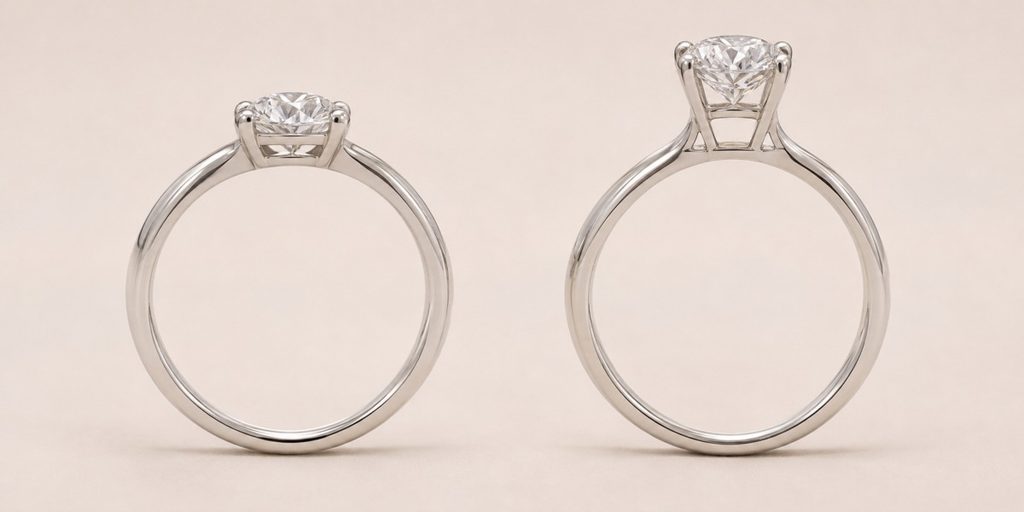
- Setting Height: A tall setting shows off the stone but catches more often on clothing and surfaces than a lower one.
- Craftsmanship: Solid casting, clean solder joints, and a good finish make a bigger difference than a premium metal on a weak design.
Diamond security comes from the whole setting working together, so it helps to understand the parts of an engagement ring before comparing quotes. A head, prongs, and shank that suit your routine will protect a stone better than the metal choice alone.
If you prefer yellow or rose gold, the band design matters just as much. A look at different gold band engagement ring styles shows how width and profile change the way a band wears.
Purchase Price and Long-Term Ownership Costs in Canada
Platinum is often assumed to cost more, but that isn’t a safe rule. Metal prices change daily, and the price of a finished ring also depends on how much metal the design uses, the purity or karat, labour, and the setting.
The fairest comparison is two dated quotes in Canadian dollars for the same design, made to the same standard of workmanship, one in platinum and one in your chosen gold. Because platinum is denser, the same ring uses more grams of metal, which can offset a lower per-gram price. Note the date on each quote, since metal prices can shift between visits.
Then add likely upkeep over the years. White gold may need periodic rhodium replating, platinum may need polishing if you don’t like the patina, and any ring may need prong checks, resizing, or retipping. Ask your jeweller what each service typically involves for the exact ring you’re considering, rather than relying on a general figure.
Choosing a Ring for Your Routine at Samuel Kleinberg
The right metal usually becomes clear once you picture a normal week. A few common scenarios:
- Hands-On Work: If you garden, lift weights, or work with tools, a sturdy band and a lower setting matter most. Either metal can work in a robust design, and some people remove rings for heavy tasks.
- Office and Typing: Rings rub against desks and keyboards. Platinum’s patina or gold’s gradual wear will show either way; decide which look you’d rather live with.
- Prefers White Metal: Weigh platinum’s natural colour against white gold’s lighter weight and its replating needs.
- Loves Warm Tones: Yellow or rose gold is the only route to that colour, and 14K versus 18K changes both the shade and the price.
When you visit, bring a few questions: What alloy is this exactly? Is it plated? How much does it weigh compared with the same ring in the other metal? What upkeep should I expect? Browsing diamond rings online first can help you narrow down the styles you like before you try them on.
Seeing the metals side by side under shop lighting and daylight makes the colour and weight differences much clearer. If you’re comparing engagement rings in Toronto, ask to try the same design in both metals before you decide.
Choosing Platinum vs. Gold for the Ring You’ll Wear Every Day
There’s no universal winner between platinum and gold. Platinum gives you natural white colour, extra weight, and a patina over time; gold gives you more colour choices, a lighter feel, and often a lower starting price, with upkeep that depends on the alloy.
The best choice is the one that fits how you live and how you want your ring to age. If you’d like to compare both metals in person, you can talk through platinum and gold options with Samuel Kleinberg and get quotes for the same design in each.
Frequently Asked Questions
1. Can platinum and gold rings be soldered together?
Sometimes, but it depends on the exact alloys and the design. Platinum and gold behave differently under heat, so joining them, for example, to fuse a wedding band to an engagement ring, needs a bench jeweller’s assessment first. Bring both rings in so the jeweller can check the metals and suggest the safest approach.
2. Can I change a gold ring to platinum without replacing the whole setting?
Not by plating. A surface coating can change how a ring looks, but it doesn’t turn the gold underneath into platinum. To get a platinum ring, the setting or band has to be remade in platinum, and your existing stone can usually be moved into it.
3. Will a resized ring need a new hallmark?
It depends on where the marks are and how much metal is removed or added. Resizing can affect or remove existing quality marks and trademarks, so ask the jeweller before the work starts whether the marks will be preserved, and check the ring when you pick it up.