
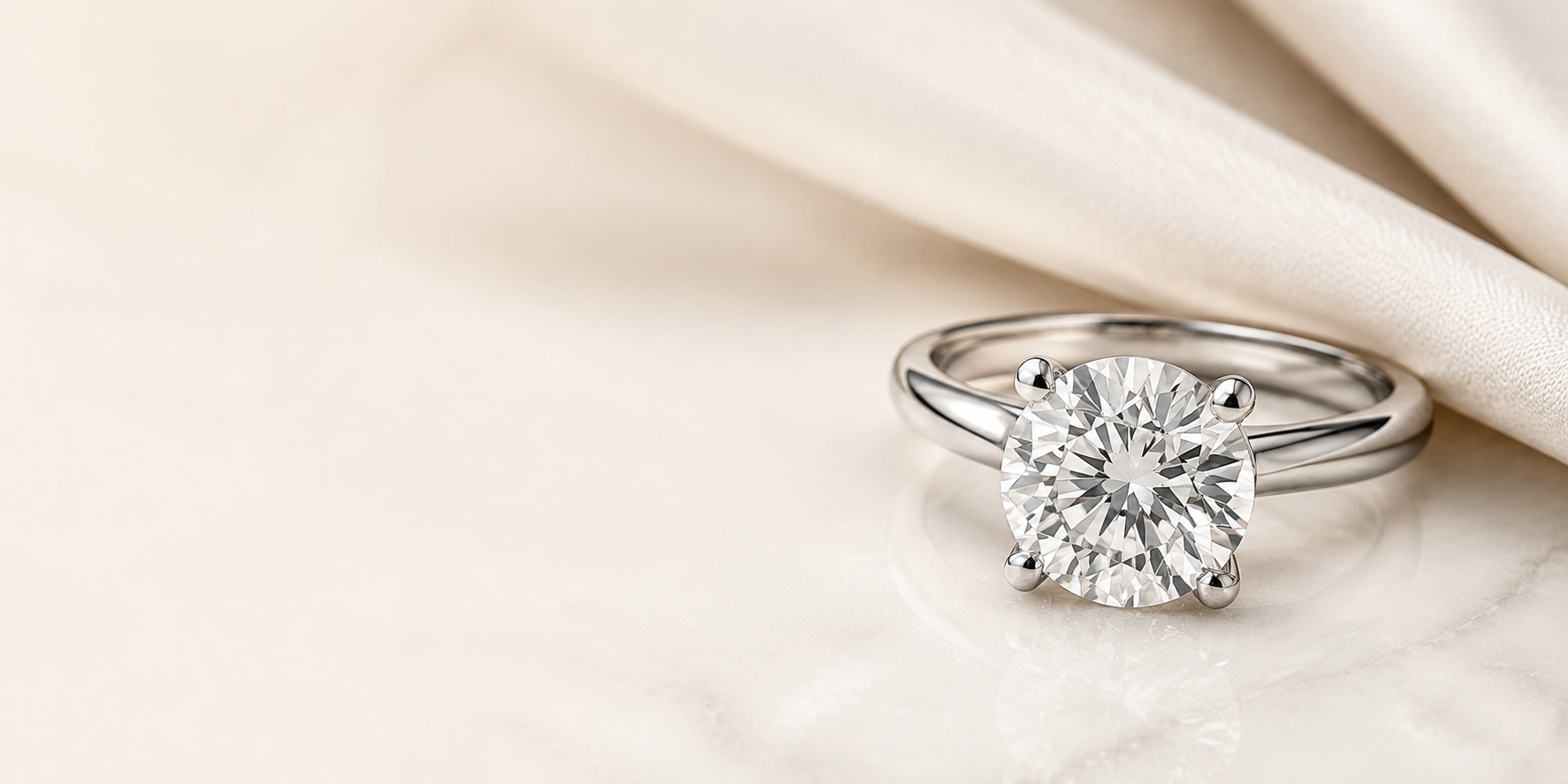
A 3-carat diamond ring has an unmistakable presence. Yet the number on a grading report cannot tell you whether the diamond will look bright, balanced, or beautiful on your hand. Carat measures weight, not visible size, and two diamonds at the same weight can differ in dimensions, light performance, and price.
Shape, cut, colour, clarity, proportions, origin, and setting all influence the finished ring. Here are seven decisions to make before buying.
1. Confirm What “3 Carats” Describes
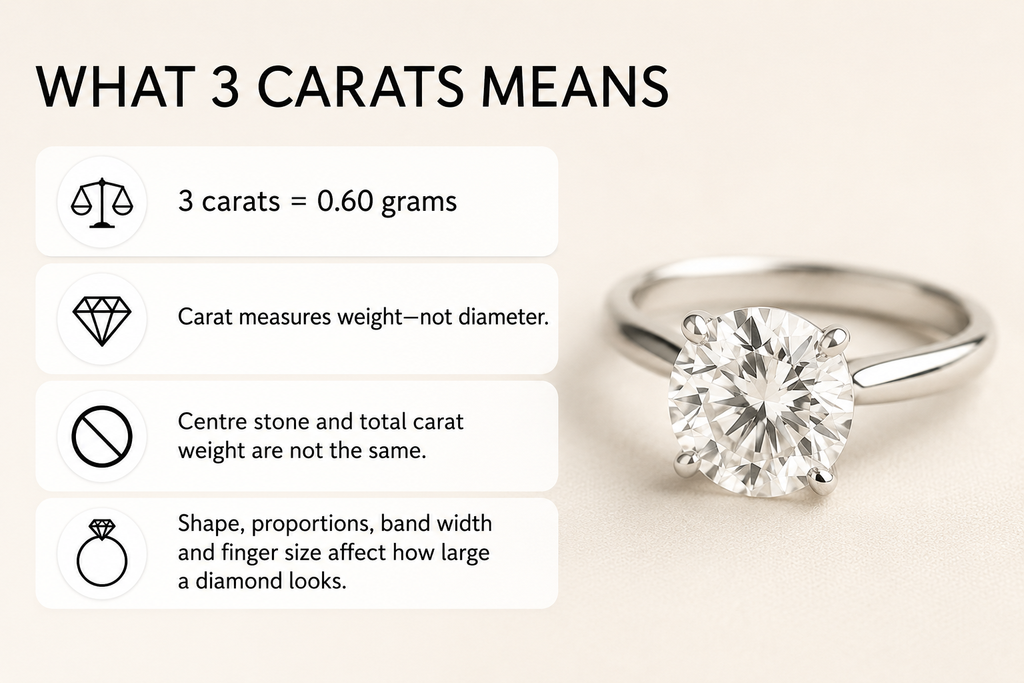
One metric carat equals 0.20 grams, so a 3-carat diamond weighs 0.60 grams. This does not establish its diameter. A deep-cut stone may hide more weight below the girdle and appear smaller face-up than a well-proportioned diamond of equal weight. Shape also changes the outline and the amount of finger coverage.
Check whether “3 carats” refers to one centre stone or the ring’s total carat weight (often written ct. tw.). A three-stone ring containing three carats in total is not the same product as a ring with a single 3-carat centre diamond plus accent stones.
Finger size, band width, and setting style affect scale, too. A slender band emphasizes the centre, while elongated outlines such as oval, pear, and marquise usually cover more of the finger.
2. Compare Shape by Beauty and Measurements
Shape determines much of a ring’s personality. Round brilliants are known for lively sparkle; ovals combine brilliance with length. Emerald cuts create broad, mirror-like flashes, radiants pair an angular outline with brilliant-style sparkle, and cushions have softer corners. Pears and marquises offer distinctive silhouettes.
No shape is automatically “best.” Compare the millimetre measurements on the grading reports, then view the stones face-up. Length-to-width ratio matters particularly for ovals, emeralds, radiants, pears, and marquises. Samuel Kleinberg’s diamond-shape guide is a useful starting point, but your eye should make the final choice.
3. Treat the 4Cs as a System
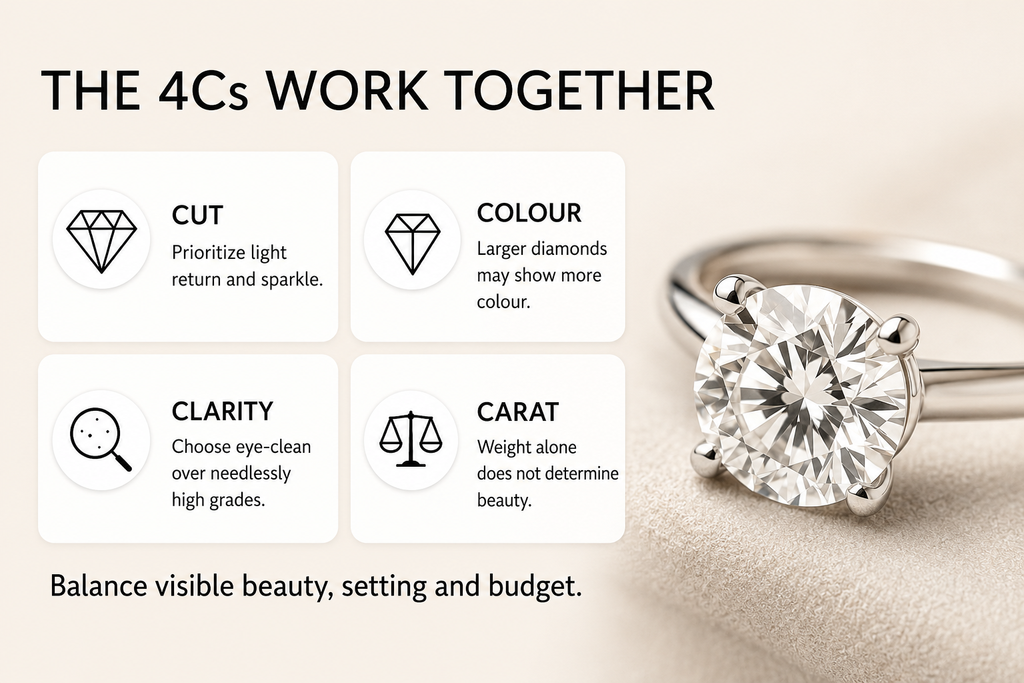
At this scale, quality differences can be easier to notice. The GIA explains that diamonds of equal carat weight may have very different values because of cut, colour and clarity.
For round brilliants, prioritize a strong cut grade because cut governs light return. Fancy shapes do not receive a universal GIA cut grade, making proportions, symmetry, and visual inspection especially useful. Colour can become more apparent in a larger stone, although shape and setting metal affect its visibility.
Clarity should be judged practically. GIA grades it under 10× magnification, and many characteristics are not visible unaided. An eye-clean stone may be a better use of budget than a top-clarity grade whose difference you cannot see. Step cuts often reveal inclusions more easily, so assess each diamond individually.
Spend first on visible qualities: light performance, shape, and face-up appearance. Balance colour and clarity against your metal and budget, leaving room for a secure setting.
4. Decide Between Natural and Laboratory-Grown
Natural diamonds form in the earth; laboratory-grown diamonds are produced in controlled environments. Lab-grown diamonds are diamonds, not lookalike materials such as cubic zirconia, but sellers should clearly disclose their origin. The FTC’s consumer guidance recommends asking about origin because visual inspection alone may not distinguish natural from laboratory-created material.
Lab-grown diamonds generally offer more size or higher specifications for a lower initial price than comparable natural diamonds. Customers who appreciate geological rarity may find natural diamonds appealing. The choice depends on budget and feelings about provenance.
Whichever you choose, obtain an independent grading report and verify its number. IGI says its diamond reports identify natural or lab-grown origin and document the 4Cs. A report describes the stone; it is not an appraisal or a guarantee of resale value.
5. Engineer the Setting Around the Centre
A 3-carat centre needs a setting that supports its weight and suits everyday habits. A solitaire keeps attention on the diamond. A hidden halo adds sparkle beneath the centre without changing the face-up outline, while pavé brightens the band. Three-stone designs add width and symbolism; a bezel creates a sleek rim and offers more edge protection, although it changes how much of the diamond is exposed.
Examine prong placement, gallery construction, setting height, and snag risk. An active wearer may favour a lower profile or bezel. Samuel Kleinberg offers engagement-ring styles and custom jewellery design, allowing the setting to be developed around the selected stone.
6. Plan the Wedding-Band Pairing Early
When choosing a wedding ring, 3-carat centre-stone proportions make profile and spacing especially important. A low basket may prevent a straight band from sitting flush, while a raised gallery can create room beneath it. Try the rings together before committing.
They do not need to match exactly. A plain band can give an elaborate engagement ring visual breathing room; a diamond band increases overall brilliance. Matching metals create continuity, while contrasting metals look intentional when their tones are repeated elsewhere. Compare widths, heights and edges so the pair feels balanced and does not rub in a way that could damage metal or pavé settings.
7. Make the Final Decision on the Hand
Specifications narrow the options; they do not replace observation. View the diamond in varied lighting and look for balanced brightness, fire, and contrast. Compare face-up spread, symmetry, and persistent dark areas. In elongated shapes, decide whether bow-tie contrast is attractive or distracting.
Then assess the ring: Is the height comfortable? Are the prongs smooth? Does it rotate? Is the centre proportionate to the hand? A “3 carats ring” search can inspire, but an in-person comparison reveals what photography and report data cannot.
Choosing Your Ring With Samuel Kleinberg
The best 3-carat ring is not necessarily the one with the highest grades. It is the diamond whose visible beauty, origin, and setting make sense for you. Samuel Kleinberg can help you consider lab-grown options and create a design around your preferred shape and lifestyle.
Book an appointment to compare 3-carat diamonds in person and find, or create, a ring that feels considered from every angle.
Frequently Asked Questions
- Is a 3-carat diamond considered large?
Yes. A single 3-carat centre diamond has a substantial presence, although its visible dimensions vary with shape and proportions.
- How much does a 3-carat diamond ring cost?
There is no dependable single price. Natural or lab-grown origin, shape, cut, colour, clarity, certification, and setting can change the total considerably. Compare like-for-like stones and request an itemized quote.
- Which shape looks biggest at 3 carats?
Elongated shapes, particularly oval, marquise, and pear, often provide generous finger coverage. Actual millimetre measurements and proportions are more informative than the shape name alone.
- Is 3 carats too big for an engagement ring?
Not inherently. The right scale depends on personal style, finger proportions, comfort, and daily activities.
- Can it be worn every day?
Yes, with a secure setting and sensible care. Remove fine jewellery for strenuous work, avoid hard impacts, and have the setting inspected periodically.
- What wedding band works best?
Choose a band whose profile fits comfortably beside the engagement ring. Straight, curved, plain, and diamond-set bands can all work; the best option depends on gallery height, band width, and the desired amount of sparkle.