
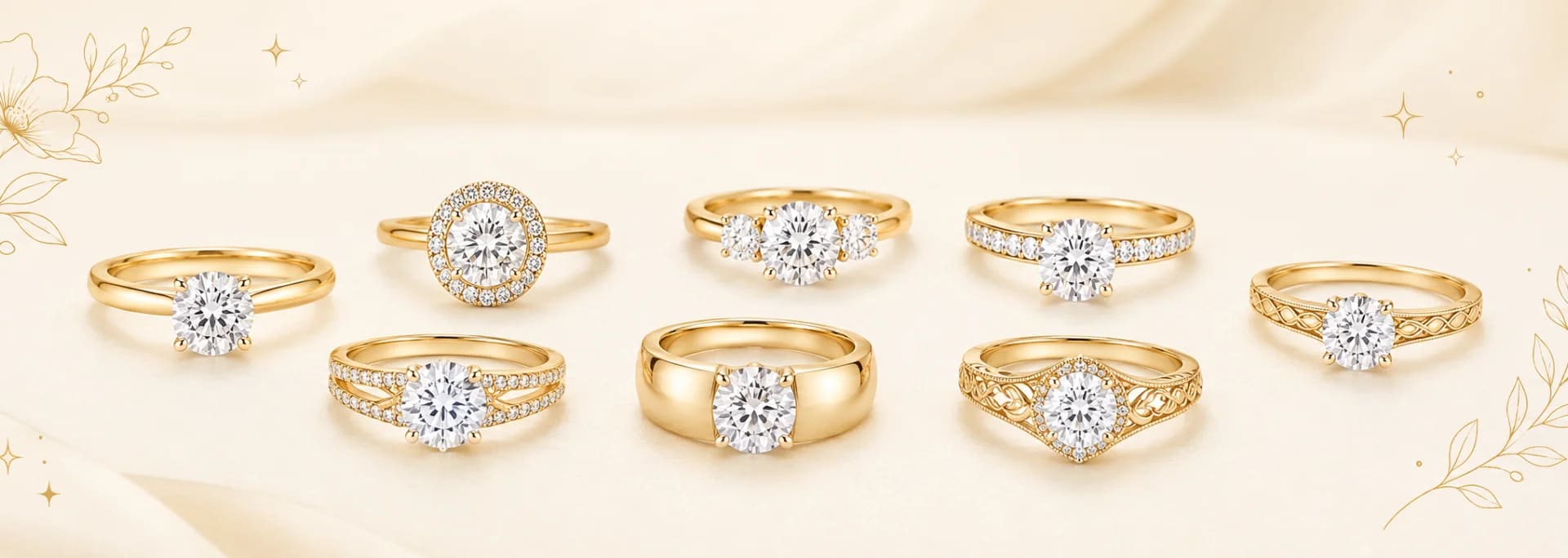
Gold has been a defining material in fine jewellery for generations, and it remains a natural choice for engagement rings. From a simple solitaire to a detailed pavé setting, an engagement ring with a gold band can feel classic, contemporary, romantic, or bold depending on the design.
The final look is shaped by more than gold colour alone. Band width, diamond shape, setting style, surface finish, and added detailing all influence how the ring appears on the hand.
If you are comparing gold band engagement ring styles, these eight options are a useful place to start.
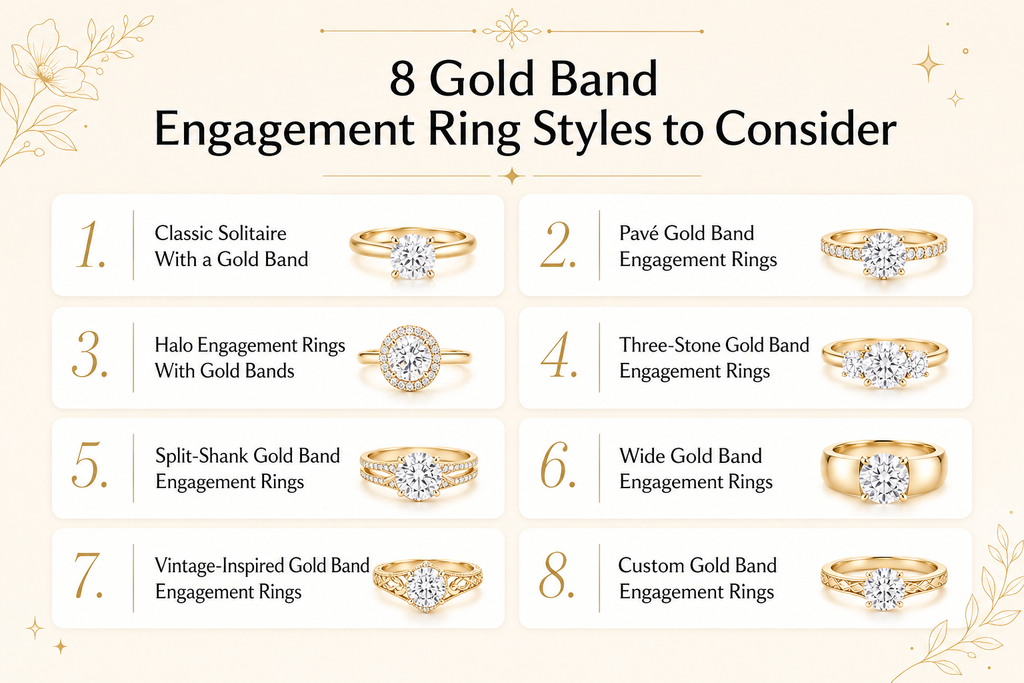
1. Classic Solitaire With a Gold Band
A solitaire engagement ring keeps the design focused on one centre diamond. With fewer decorative elements around the stone, the diamond becomes the main visual feature.
A simple gold band can make the solitaire feel refined and timeless, while details such as tapered shoulders, a knife-edge profile, or a distinctive prong arrangement can give the same basic design a more contemporary character.
Solitaire settings are also versatile when it comes to diamond shape. Round, oval, emerald, radiant, princess, and pear-shaped diamonds can all work well, although the proportions of the band and setting should complement the stone.
Best for: Buyers who prefer clean lines, timeless design, and a strong focus on the centre diamond.
2. Pavé Gold Band Engagement Rings
For more sparkle, consider a pavé engagement ring.
Pavé designs feature small diamonds set along part or all of the visible band. These additional stones create brilliance around the centre diamond without necessarily making the setting feel heavy.
A partial pavé band can provide a more subtle effect, while a more extensively diamond-set band creates a brighter and more glamorous appearance.
The amount of visible gold also changes with the pavé style. Some designs retain clear areas of polished metal, while others allow the diamonds to dominate the band visually.
Best for: Buyers who want additional sparkle while keeping a traditional centre-stone arrangement.
3. Halo Engagement Rings With Gold Bands
A halo engagement ring surrounds the centre diamond with a frame of smaller stones.
This creates more visual presence around the centre and can give the top of the ring a highly detailed appearance. Depending on the design, the halo may closely follow the shape of the diamond or create a more geometric outline around it.
Halo styles can also be combined with plain or pavé gold bands, giving buyers another way to control how much sparkle appears throughout the ring. The Round Diamond Hidden Diamond Halo Engagement Ring offers another option by keeping the halo detail beneath the centre diamond.
Compared with a solitaire, a halo generally feels more decorative and noticeable. For a design that extends this detail into the band, the round lab diamond halo engagement ring combines a halo with a wide split shank.
Best for: Buyers who want a prominent centre setting and additional diamond detail.
4. Three-Stone Gold Band Engagement Rings
A three-stone engagement ring uses two side stones to frame the main centre diamond.
This arrangement creates greater diamond coverage across the finger and gives the ring a different balance from a solitaire or halo design.
The side stones can complement the centre stone with matching shapes or create contrast through a different cut. For example, a centre emerald-cut diamond may be paired with tapered side stones, while round diamonds can be used together for a softer and more symmetrical look.
Proportion is particularly important with three-stone designs. The size and shape of the side diamonds should support the centre diamond rather than compete with it.
Best for: Buyers who want more diamond presence across the finger.
5. Split-Shank Gold Band Engagement Rings
A split-shank ring uses a band that separates into two sections as it approaches the centre setting. The round brilliant engagement ring with a diamond halo split shank combines this structured band with additional brilliance around the centre stone.
The resulting open space adds structure to the ring and makes the band itself a more visible part of the design. Depending on the style, the split sections may be polished gold, diamond-set, curved, or arranged in a more architectural shape.
This style can work particularly well with larger centre settings because the divided band provides a stronger visual foundation around the stone.
A split shank can also offer a useful middle ground between a narrow classic band and a wider statement design.
Best for: Buyers who want a distinctive band without moving into a very wide or heavy design.
6. Wide Gold Band Engagement Rings
Not every engagement ring needs a thin band.
A wider gold band gives the metal greater visual importance and can create a bold, modern appearance. A structured design such as the raised square diamond band can complement this modern look while adding carefully placed diamond details. Depending on the design, the band may remain the same width throughout or taper toward the centre diamond.
Wider bands can look particularly striking with larger centre stones, but balance matters. A very small stone on an extremely wide band may appear visually overwhelmed, while a large stone on a very delicate band can create the opposite effect.
Comfort is another consideration. Since a wider band covers more of the finger, it is worth trying different proportions in person.
Best for: Buyers who prefer substantial jewellery and a stronger gold presence.
7. Vintage-Inspired Gold Band Engagement Rings
Vintage-inspired engagement rings often use decorative details that go beyond the basic centre stone and band.
These may include engraving, milgrain edges, bead-set diamonds, ornate galleries, geometric motifs, or other detailed metalwork. The milgrain textured diamond band is a fitting example for buyers drawn to texture and vintage-influenced detailing.
Gold works especially well in these designs because the metal itself becomes part of the visual character of the ring. The fancy diamond carved band demonstrates how carving and diamond accents can make the gold itself a central part of the design. Yellow gold can create a warmer, more traditional appearance, while white gold may emphasize geometric lines and diamond detail.
The diamond shape can also reinforce the vintage-inspired look. Asscher cut rings and emerald cut rings, for example, have structured step-cut facets that can complement more architectural designs.
Best for: Buyers who appreciate detailed craftsmanship and distinctive styling.
8. Custom Gold Band Engagement Rings
Sometimes the right ring combines elements from several different styles.
A custom engagement ring allows you to choose the details together rather than working within one existing design. The custom engagement ring with a squared band and six prongs shows how a distinctive band profile and secure setting can be combined in one design.
Depending on the concept, you may be able to select:
- Gold colour
- Band width and profile
- Diamond shape
- Centre stone size
- Setting style
- Pavé or side stones
- Engraving
- Surface finish
- Decorative details
Custom design can be especially helpful if you like the simplicity of a solitaire but want a wider band, or if you prefer a three-stone arrangement with a particular combination of diamond shapes.
Samuel Kleinberg can help buyers explore existing designs and discuss custom engagement ring options for a more personal result.
Best for: Buyers with a specific combination of design details in mind.
Choosing the Right Gold Colour
Once you have an idea of the setting style you prefer, consider how the colour of the gold affects the overall appearance.
Yellow Gold
Yellow gold engagement rings have a warm and traditional appearance.
The contrast between yellow gold and a white diamond can make the difference between the metal and centre stone more noticeable. Yellow gold works well with simple solitaires, decorative vintage-inspired designs, and many modern settings.
It may also appeal to buyers who already wear yellow gold jewellery regularly and want their engagement ring to coordinate with existing pieces.
White Gold
White gold engagement rings create a bright, neutral appearance.
Because the metal colour is closer to that of a white diamond, white gold can create a more continuous visual transition between the band and setting.
It works particularly well for buyers who want the diamond to remain the strongest visual feature and suits everything from minimalist solitaires to detailed pavé and halo settings.
Rose Gold
Rose gold has a soft pink tone that gives an engagement ring a warmer and more distinctive appearance.
It can make a simple design feel more romantic and can also provide contrast against a white diamond.
Because the colour of rose gold is visually noticeable, it is worth considering how it works with the other jewellery you wear most often.
Matching the Diamond Shape to the Band
The diamond shape can change the proportions of the entire engagement ring.
A round cut ring offers a classic, balanced appearance, while elongated shapes such as oval, emerald, radiant, and pear-shaped diamonds can create more vertical presence on the finger.
Angular shapes such as princess cut and Asscher cut diamonds create a more geometric feel.
Rather than choosing the diamond and band independently, consider how they look together. A narrow band may make an elongated diamond appear more prominent, while a wider or split band can better support a substantial centre setting.
What Gold Band Width Should You Choose?
Band width has a major influence on the final look of the ring.
Thin Bands
Thin bands create a delicate appearance and place greater visual emphasis on the centre diamond. They are often seen in solitaire and pavé designs.
Medium-Width Bands
A medium-width band offers balance and versatility. It provides enough visible gold to form part of the design without competing strongly with the centre stone. For someone who wants the gold to play a stronger role in the design, the gold brick band introduces texture through a structured repeating pattern.
Wide Bands
Wide bands feel more substantial and contemporary. They can work particularly well when the wearer prefers statement jewellery or when the centre stone has enough scale to balance the additional metal.
There is no single correct width. Trying several options on the hand is usually more helpful than judging the proportions from photographs alone.
Small Details that Can Change the Entire Ring
Two engagement rings can use the same diamond shape and gold colour but still look very different because of small design choices.
Consider elements such as:
- A straight or tapered band
- High-polish or textured gold
- A knife-edge profile
- Engraving
- Milgrain
- Hidden diamond accents
- Plain versus diamond-set shoulders
- Setting height
- Prong style
These details become particularly important when designing a custom ring because they can shift the overall appearance from minimal to ornate without changing the main stone.
How to Choose the Right Gold Band Engagement Ring
Before deciding on a specific design, consider the ring as a complete piece rather than focusing on one feature at a time.
Think about:
- Whether you prefer a solitaire, pavé, halo, or three-stone setting
- How much additional sparkle you want
- Which gold colour works with the jewellery you already wear
- Which diamond shape suits your style
- Whether you prefer a delicate or substantial band
- How high the centre stone sits
- Whether the ring feels comfortable on your hand
- How it will sit beside a wedding band
The most visually impressive ring in a photograph is not automatically the best choice for everyday wear. Proportion, comfort, and personal style matter just as much.
Find Your Gold Band Engagement Ring at Samuel Kleinberg
A gold band engagement ring can be understated, highly detailed, traditional, or distinctly modern. The right choice comes from finding the combination of gold colour, diamond shape, setting, and band proportions that feels right for you.
At Samuel Kleinberg, you can explore solitaire, pavé, halo, and three-stone engagement rings alongside different diamond shapes and gold colours.
For buyers looking for something more personal, custom design offers the opportunity to bring several preferred elements together in one cohesive ring.
Book an appointment with Samuel Kleinberg to explore gold band engagement rings and find or create a design that suits your style. Explore engagement rings in Toronto at Samuel Kleinberg and compare gold band designs that suit your style, diamond and preferred metal colour.
FAQs
- Is gold a good choice for an engagement ring?
Yes. Gold is widely used in fine jewellery and is available in different colours and karat options. The best choice depends on the ring design, wear habits, and maintenance preferences.
- What type of gold is best for an engagement ring?
There is no single best option. Yellow gold offers warmth and contrast, white gold creates a bright and neutral appearance, and rose gold has a softer pink tone. Personal style should guide the choice.
- Is yellow gold popular for engagement rings?
Yellow gold remains a classic option and works with both traditional and contemporary engagement ring designs.
- Does a diamond look different on a yellow gold band?
Yes. Yellow gold can create stronger colour contrast against a white diamond, while white gold generally creates a more seamless visual transition between the metal and stone.
- How wide should an engagement ring band be?
It depends on the centrepiece, ring design, and personal preference. Thin bands feel more delicate, medium-width bands offer balance, and wider bands create a stronger statement.
- Can you mix a gold engagement ring with a different-colour wedding band?
Yes. Mixing metal colours can create an intentional layered look. It is still important to consider how the profiles, widths, and settings of the two rings sit together.